












Hong Kong Watchmaking: From Contract Assembly to Independent Craftsmanship

The story of Hong Kong’s watchmaking industry doesn’t actually begin at the watch factory — it begins with the case and the strap. As early as the 1930s, a group of craftsmen with backgrounds in machining or metalwork were already producing watch cases locally. By the mid-1950s, this component industry had grown to a substantial scale, and the steady supply of cases and straps, paired with cheap imported movements from Europe, gave rise to a full watch-assembly industry. From there, Hong Kong’s watchmaking sector has followed a complete arc — from components, to assembly, to material transitions, and finally to an independent design language today. None of these shifts were the result of careful planning; every one of them was forced by the market.
From Component Industry to Assembly Hub
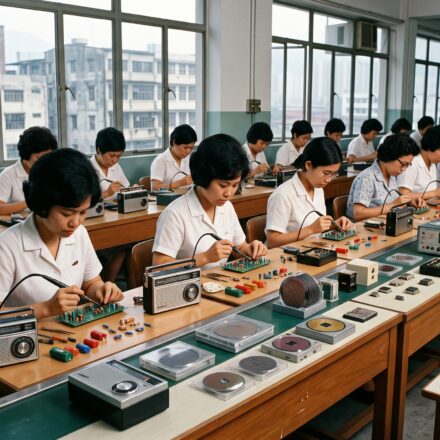
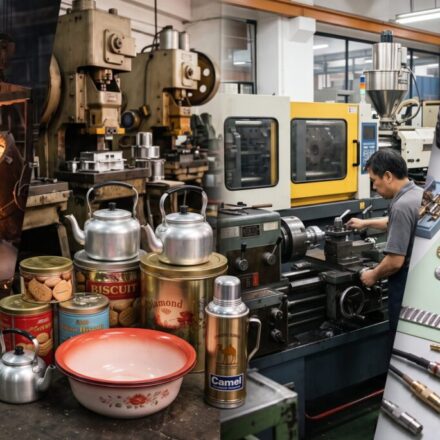
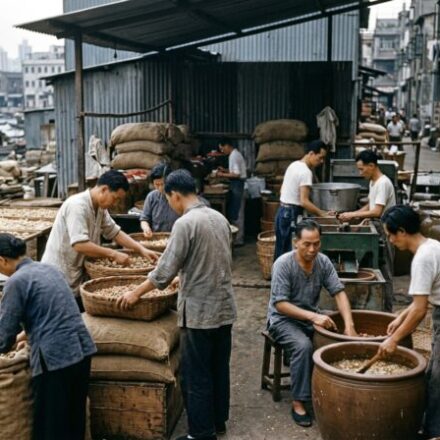
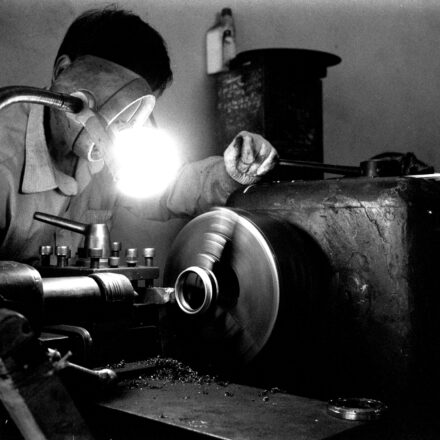
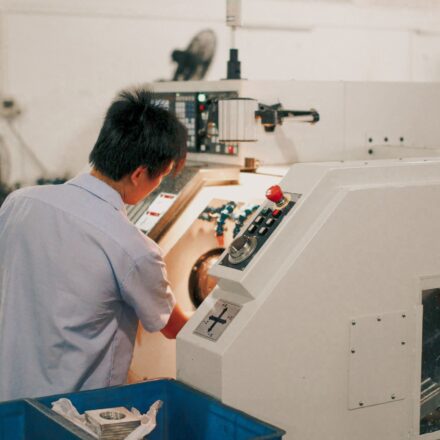
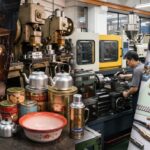
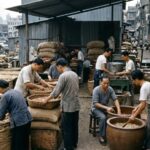
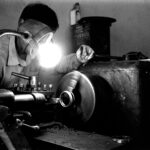
Before the 1950s, Hong Kong’s watch factories mainly imported low-grade movements known colloquially as “rough movements,” pairing them with locally made components to assemble low-to-mid-range watches for export to the United States, Japan, and the Middle East. Between the 1950s and 1960s, most watch-case factories were housed in old tenement buildings or ground-floor shops in older districts, run as family businesses with basic equipment. Most workers entered the trade through apprenticeship, relying on a master craftsman’s experience and touch to control quality. This kind of small-workshop precision craft became the foundation on which the entire industry would later build.
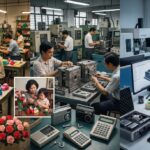
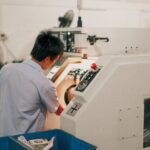
The turning point came in the late 1960s: as Swiss movements began arriving in Hong Kong in large volumes, full watch assembly gradually overtook simple component production to become the mainstay of the industry. The growth that followed was remarkable — in just six years, from 1968 to 1974, exports of Hong Kong-made finished watches grew roughly fivefold in volume, and around eightfold in value. From that point on, Hong Kong’s watch industry was no longer just a supplier of parts — it had become the core of a complete assembly chain.
A Nimble Pivot Amid the Quartz Wave
From the late 1970s through the mid-1980s, electronic and quartz watches emerged one after another, with movements far cheaper than their mechanical counterparts. What became known as the “quartz crisis” plunged many of Europe’s traditional watchmakers into difficulty — but it ended up working in Hong Kong’s favor. Local watch factories quickly pivoted to importing electronic and quartz movements in bulk, while local electronics factories began supplying electronic movements of their own, driving a substantial expansion in both production capacity and output.
Between 1968 and 1974, exports of Hong Kong-made finished watches grew roughly fivefold in volume and eightfold in value. By 1992, Hong Kong-made watches accounted for roughly 70% of global supply, making watches one of Hong Kong’s four largest export categories.
This history makes one thing clear: the competitiveness of Hong Kong’s watch industry was never rooted in loyalty to any single technology — it came from the speed at which it responded to market shifts. When the golden age of the mechanical watch came to an end, Hong Kong wasn’t left behind. Instead, thanks to its flexible production rhythm and tight cost control, it secured a central position in the global supply chain during the quartz era.
Independent Brands and a Contemporary Aesthetic Awakening
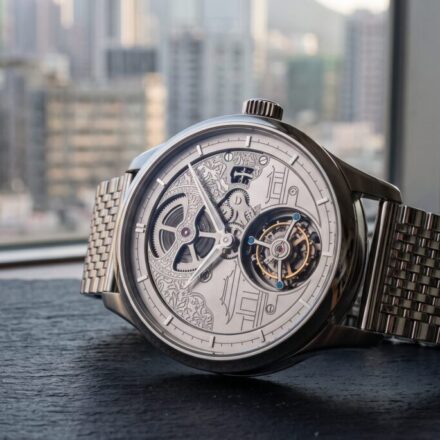
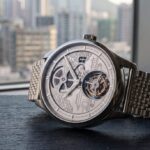
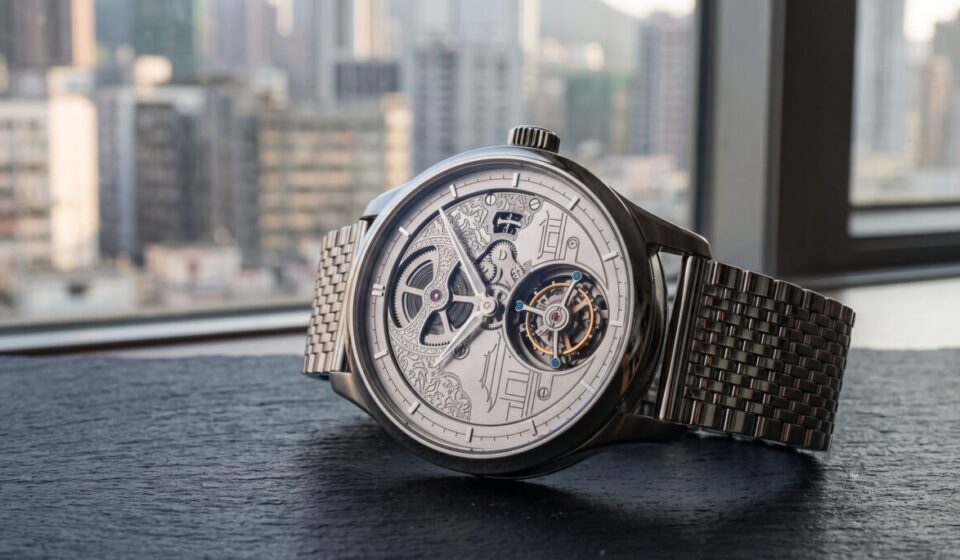
Pure assembly advantage, however, has its limits. As labor costs rose, profit margins on contract manufacturing began to narrow, and a number of technicians well versed in mechanical construction started leaving the large OEM factories to focus instead on complex mechanisms such as tourbillons — hoping to give Hong Kong watchmaking a deeper design language, beyond simply being “fast and accurate.”
Memorigin, a local brand, has come to represent this new generation of watchmakers, who were the first to systematically weave Eastern aesthetics into complicated watch movements — drawing on everything from traditional paper-cutting patterns to architectural lines. A watch was no longer just a device for telling time; it became a miniature work of art capable of telling a story. At the heart of this transformation isn’t just improved craftsmanship — it’s a redefinition of what “Made in Hong Kong” actually means: shifting the question from “who can make it cheapest” to “who can tell the most distinctive story.”
Reshaping the Global Value Chain: The Road Ahead
Today, Hong Kong’s watch industry is working to claim its place in the international luxury market. Through cross-industry collaborations with overseas celebrities, athletes, and international IP, combined with digital marketing that reaches consumers directly, local brands are gradually breaking free of the constraints of geography and traditional distribution channels. Even as the global manufacturing map keeps shifting, the decades of precision-engineering infrastructure and supply-chain management expertise that Hong Kong has built up remain a strategic asset that’s genuinely difficult to replicate.
From the watch-case craftsmen working out of tenement ground-floor shops in the 1930s, to an assembly-line empire supplying 70% of the world’s watches in the 1990s, to today’s independent designers weaving Eastern narratives into tourbillon movements — Hong Kong’s watchmaking industry has completed the full journey from contract manufacturing to an independent creative voice. That journey may well be the most compelling model for how Hong Kong manufacturing has transformed itself over time.

Chief Editor, MIHK Focus
Directing editorial research on Hong Kong’s industrial history, heritage brands, and modern manufacturing trends. Focused on delivering structured observations, market insights, and archive-backed narratives on local production and commercial dynamics.
Follow Me