








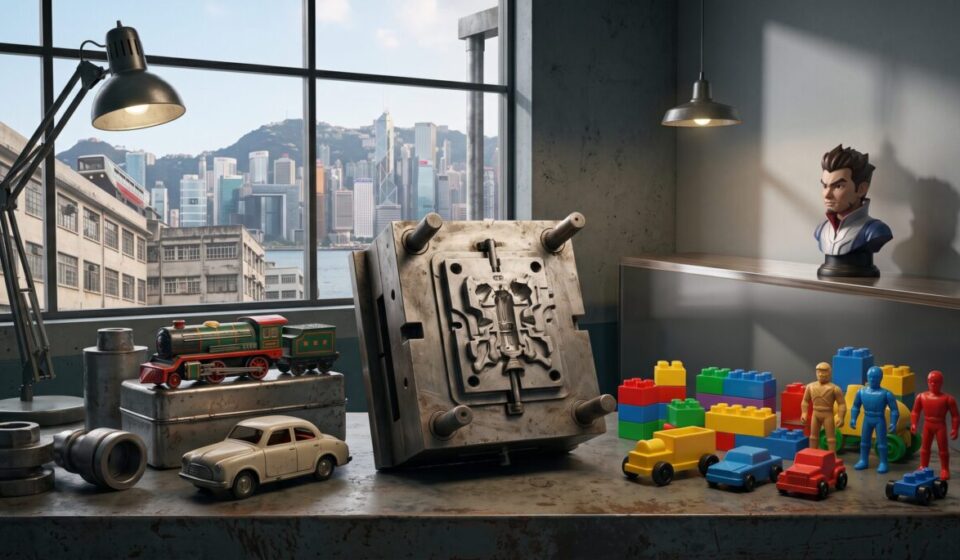
Hong Kong Toys: From Tenement Workshops to a Global Design Empire

In 1948, a newly opened small factory in Hong Kong ran into an unexpected problem: after trade embargoes imposed in the wake of the Korean War, the company couldn’t even get hold of the imported metal molds needed to produce toys. That crisis, ironically, forced through one of the most important technical breakthroughs in Hong Kong’s toy industry — the ability to make molds in-house. From that point on, “Made in Hong Kong” toys stopped being mere copies and became part of a complete industrial chain, spanning molds, materials, and market instinct. That chain would go on to travel further than almost anyone could have predicted — from injection-molding machines squeezed into tenement-block units, to a peak in the 1980s where Hong Kong accounted for 60% of global toy exports, to today’s design-driven empire carving out its own niche in the collectibles market.
Building Mold-Making Capability: A Technical Breakthrough Forced by Embargo
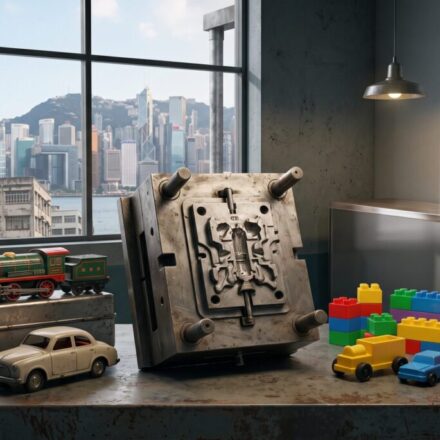
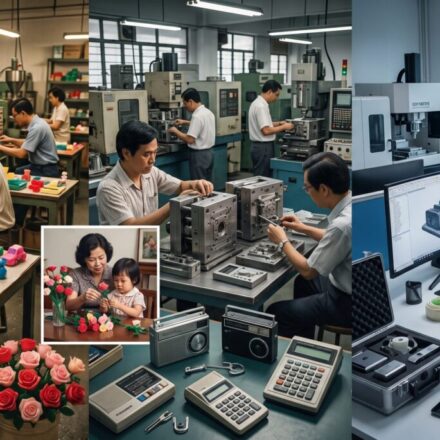
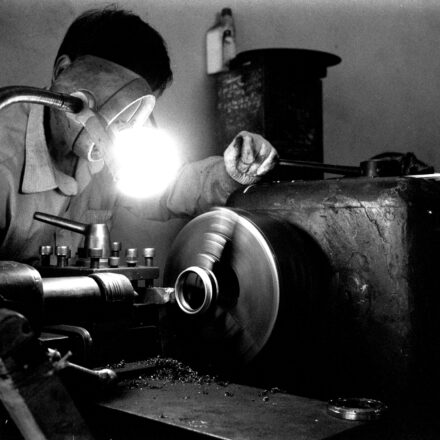
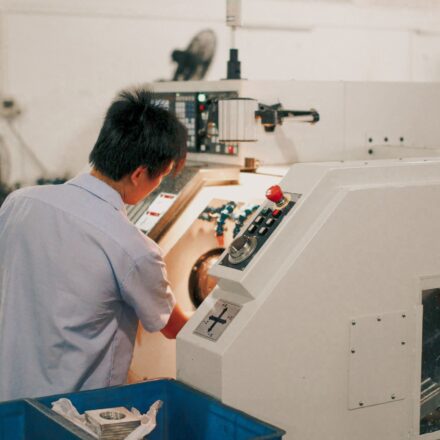
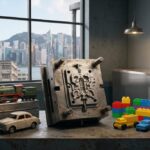
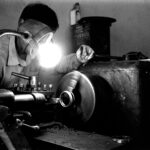
Kader Industrial, founded in 1948, is one of the most iconic names in Hong Kong toy history. In its early days, the company mainly produced plastic toys and friction-powered toys for export, but at the time, Hong Kong manufacturers had no capability to design or make their own molds and relied entirely on imports from abroad. During the Korean War, Western trade embargoes against China ended up disrupting Hong Kong’s channels for importing molds as well, hitting local production hard. Kader’s response was to invest in developing its own mold-making technology from scratch, eventually becoming the first toy company in Hong Kong capable of producing molds in-house. This capability, born out of necessity, went on to become a shared asset for the entire industry — once mold-making took root locally, other manufacturers could quickly follow suit, and toy design freedom and production speed both increased dramatically as a result.
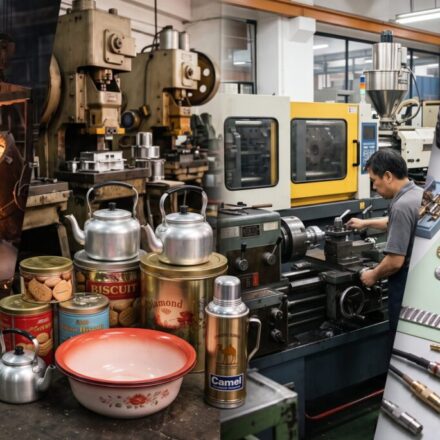
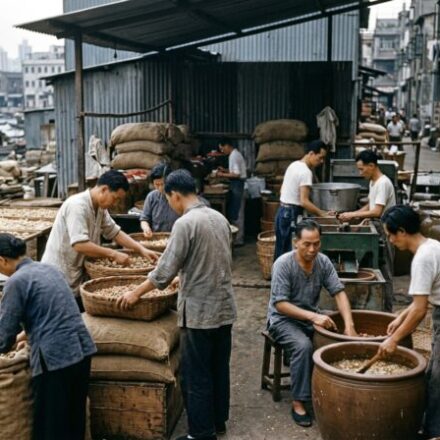
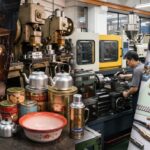
At the same time, the range of materials used in Hong Kong’s toy industry was richer than most people realize. Beyond plastics, Hon Yuen Can Manufactory, which relocated from Shanghai to Hong Kong, produced packaging tins but was also one of the city’s best-known tinplate toy makers, bringing the tinplate toy craftsmanship that had matured in 1930s Shanghai over to Hong Kong. With plastic and tinplate developing side by side, Hong Kong’s toy industry had already reached a substantial scale by the 1950s and 60s, with exports as its primary focus from the outset.
From Contract Manufacturing to Branding and Licensing
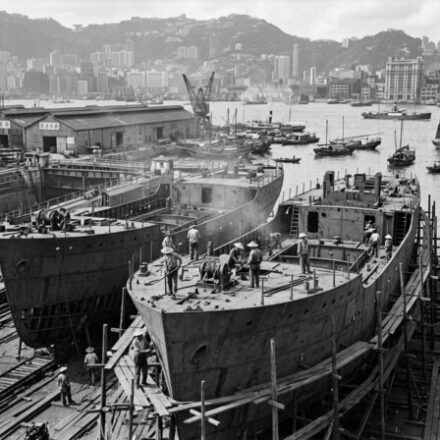
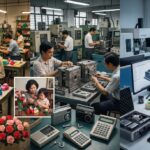
By the mid-1960s, the United States had become Hong Kong’s largest export market, with toys, garments, plastic flowers, and wigs among the leading products shipped there. Entering the 1970s, Hong Kong’s larger factories increasingly adopted an OEM (original equipment manufacturer) model with American clients, and order volumes grew accordingly. This was also the period when Hong Kong’s toy industry became deeply woven into international trade networks — Li & Fung, one of the era’s leading export trading houses, was founded in Guangzhou back in 1906 and opened a Hong Kong branch in 1937, later pioneering global supply-chain management and helping connect the capacity of Hong Kong factories — toy manufacturers included — with department stores and retail networks across Europe and America. This model — design coordination in Hong Kong, production split across the mainland and local factories, and trading houses linking it all to the global market — became a widely studied prototype for modern supply-chain management.
As competition intensified, pure contract manufacturing was no longer enough to manage risk, and manufacturers began recognizing the value of design and licensing — bringing in licenses for international cartoon and film characters and investing in local R&D and design teams, allowing “Made in Hong Kong” to retain its cost advantage while gradually gaining a real say in design as well.
In 1980, Hong Kong accounted for roughly 60% of global toy exports, making it the largest single source of toys for the American market.
The Post-Manufacturing Era: From the Assembly Line to the Collector’s Shelf
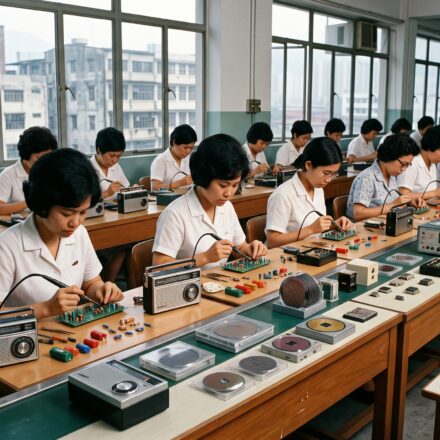
From the mid-1980s onward, as land and labor costs rose, large-scale production lines gradually shifted north to the Pearl River Delta, and Hong Kong’s role evolved from “manufacturing center” to “hub for design, sourcing, and brand management.” Rather than weakening the industry’s influence, this shift gave rise to a new generation of local brands focused on high-end collectibles and original design.
The most emblematic example is Kennyswork, founded in 2006 by designer Kenny Wong. His original character Molly — inspired by a sketch of a little girl on Victoria Peak — wasn’t taken seriously at first, but its distinctively stubborn expression eventually won over the international collectibles market, with cumulative sales surpassing ten million units and a distribution network spanning dozens of countries. From a plastic toy factory forced to master mold-making out of sheer necessity in 1948, to a design studio conquering the global collectibles market with original IP today, Hong Kong’s toy industry has traced a complete arc — from technical self-sufficiency born of survival, to a design voice claimed on its own terms. That arc is perhaps the truest footnote to the story of “from plastic scraps to a global empire.”

Chief Editor, MIHK Focus
Directing editorial research on Hong Kong’s industrial history, heritage brands, and modern manufacturing trends. Focused on delivering structured observations, market insights, and archive-backed narratives on local production and commercial dynamics.
Follow Me