













Metal, Tools and Repair: One Facet of Early Hong Kong Manufacturing

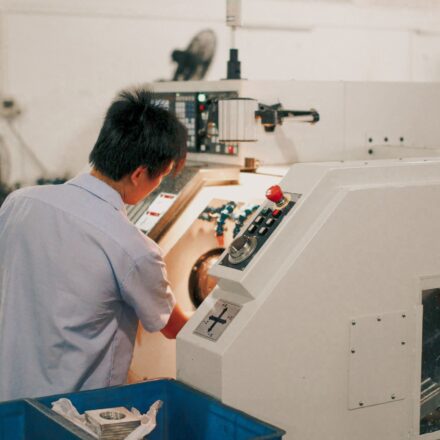
What did metalworking look like in Hong Kong’s early manufacturing history? The answer is a complete technological ladder: it began with the heavy-duty casting needed for port repairs in the 19th century, moved through large-scale production of household hardware and metal containers in the 1920s to 1950s, progressed to machine-tool manufacturing that supported other industries from the 1950s to 1970s, and finally reached the precision metal components used in watches, electronics, and fashion accessories between the 1960s and 1980s. Metalworking was never a supporting player in Hong Kong’s manufacturing story — it was the backbone running through the entire process of industrialization.
Casting Takes Root in Port Repair: The Mid-to-Late 19th Century
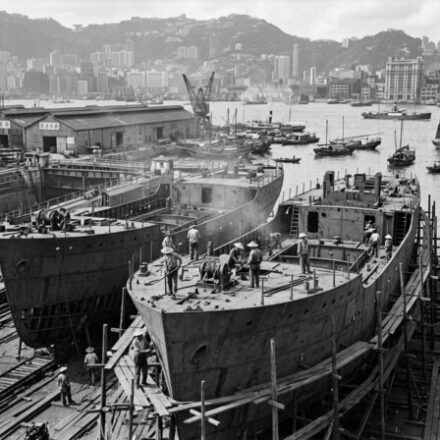
After Hong Kong became a port, metalworking first emerged out of the demands of port operations and ship repair, with production concentrated in heavy industry and structural engineering.
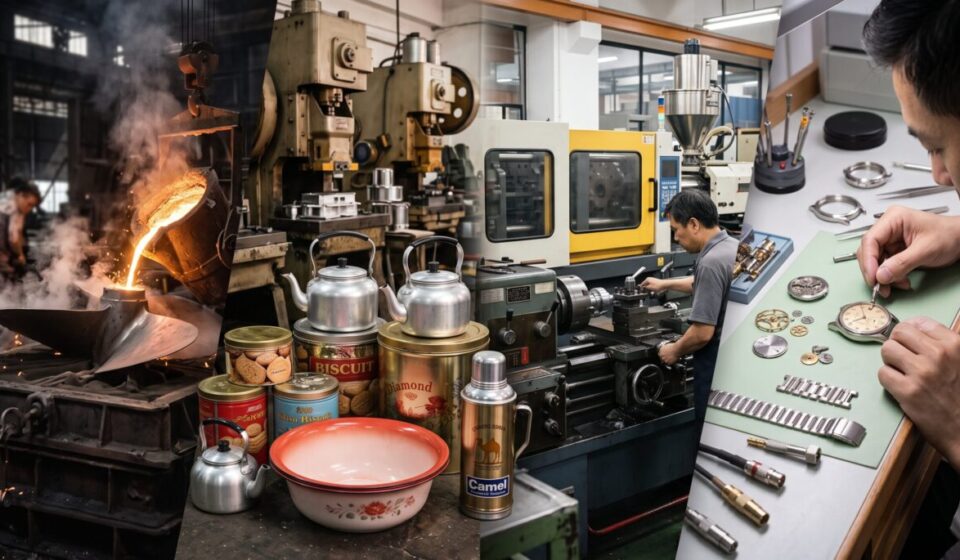
- Dockyard foundries: Hong Kong and Whampoa Dock Company, established in 1863, and Taikoo Dockyard, which began construction in 1900 and became fully operational in 1907, both housed large-scale foundries and forging workshops. These facilities could cast large iron components, machine ship propeller shafts, and weld boiler parts — making them among the earliest facilities in Hong Kong capable of heavy metal casting, and a genuine part of the city’s historically “Made in Hong Kong” heavy metalworking industry.
- Small blacksmith workshops: Around the port, in areas like Central and Hung Hom, clusters of blacksmith shops produced chains, anchors, iron gates, and hand-forged tools for local vessels, construction projects, and everyday use — representing a second, more grassroots strand of metalworking alongside the heavy dockyard foundries.
Household Hardware and Metal Container Manufacturing: 1920s to 1950s
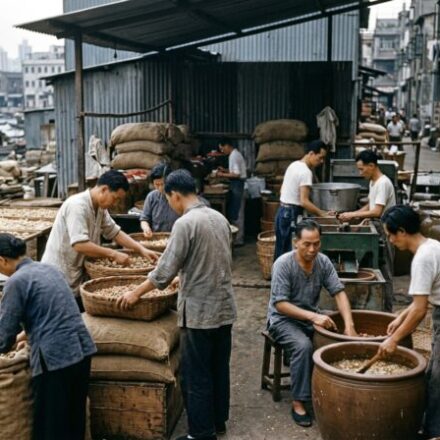
As Chinese and Shanghainese capital flowed in and the local population grew, metalworking gradually shifted from heavy repair work toward the large-scale manufacturing of consumer goods and packaging containers, laying the technical groundwork for Hong Kong’s metal stamping and surface-treatment industries.
Enamelware: From Shanghai Capital to the Nigerian Market
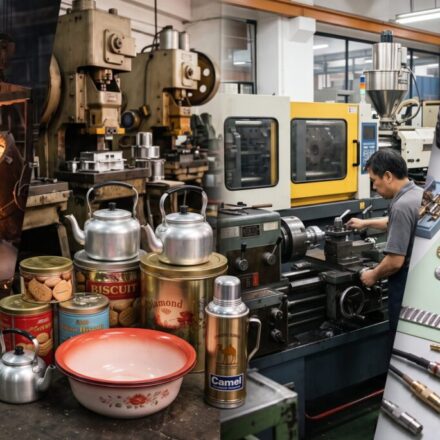
Hong Kong Enamel Company, founded in 1952 by Poon Sit-yeung, Yip Chun-cho, and Poon Chi-keung, was one of Hong Kong’s leading enamelware manufacturers in the 1950s, known for its “Diamond” brand products. Like many of their contemporaries in the trade, all three founders were part of the wave of Shanghainese capital that moved south after the war. Enamelware production involved stamping thin sheet metal into shape before coating it with enamel glaze and firing it at high temperature, producing basins, spittoons, cups, and lunch boxes that were exported widely to Southeast Asia and Africa.
The most striking transformation story in this sector belongs to Orient Enamel Company. In the early 1960s, as Asian markets began shifting toward plastic products and demand for enamelware declined, Orient Enamel relocated its production base from Hong Kong to Nigeria, which had recently gained independence from British colonial rule, redesigning its patterns for the local market — swapping traditional Asian floral motifs for tropical fish, antelope, and geometric designs drawn from Islamic artistic traditions. This flexibility to relocate production in response to shifting markets was a defining trait of Hong Kong’s early light industry, and offers a concrete example of how a “Founded in Hong Kong” brand could evolve into an overseas production base.
Aluminum Goods and Household Items
As aluminum imports increased after the war, metalworking factories used rolling and drawing techniques to produce aluminum kettles, steamers, and lunchboxes. Lightweight and rust-resistant, aluminum quickly became a staple material in household life at the time.
Tinplate Containers and Metal Cans
To meet packaging needs for local cooking oil, biscuits, paint, and cosmetics, a tinplate can-making industry emerged, with factories adopting tinplate printing and automatic seaming techniques to manufacture a wide range of tin cans and ointment boxes.
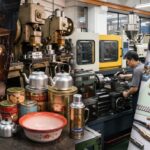
Vacuum Flasks: A Metal-Stamping Craft That Has Lasted Over 70 Years
Camel, a local brand founded in 1949, still prints “CAMEL 1949” on its products to this day — a rare example of a “Founded in Hong Kong” brand that has kept its original metal-stamping, lacquering, and hand-assembly techniques going for over seven decades. The core structure of its vacuum flasks embodies the integration of precision metal-casing stamping with glass-liner assembly.
Construction Hardware and Domestic Machine Manufacturing: 1950s to 1970s
Postwar reconstruction and the public housing program drove demand for construction hardware, while local industry’s growing need for production equipment pushed metalworking up to the level of machine manufacturing.
- Construction hardware and locks: Local metal factories produced nails, steel-reinforcement components, brass door locks, hinges, and metal roller shutters in large volumes.
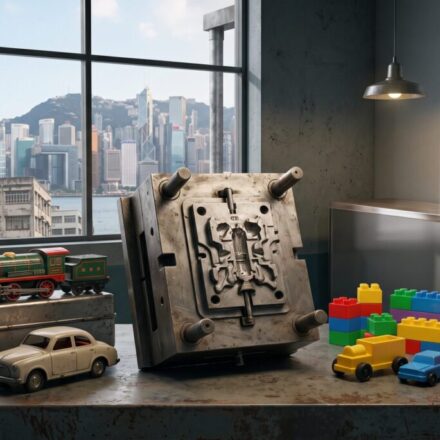
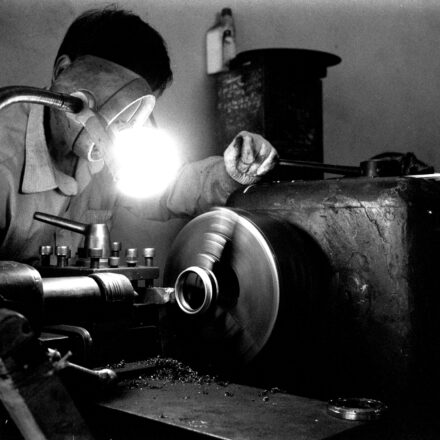
- Industrial machinery and mold-making: Chen Hsong Machinery, founded by Tsiang Chen in 1958, began by machining metal parts and repairing machinery before developing locally manufactured plastic injection-molding machines, eventually growing into one of the world’s leading injection-molding machine makers. This kind of work didn’t just produce goods — it supplied the “mother machines,” the machine tools, that other manufacturing industries depended on, marking a key step in Hong Kong metalworking’s evolution from making products to making the equipment that makes products.
Precision Metal Components and Surface Treatment: 1960s to 1980s
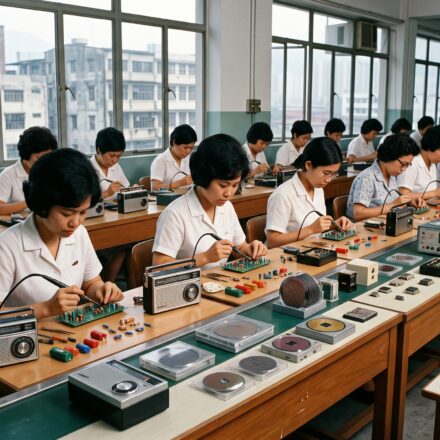
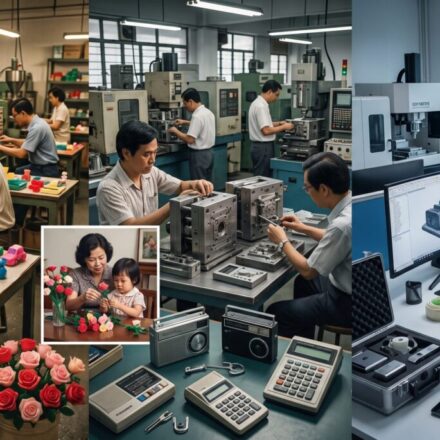
As the electronics and watchmaking industries took off in the 1960s and 1970s, Hong Kong’s metalworking technology moved toward miniaturization, with a focus on high precision and extremely tight tolerances.
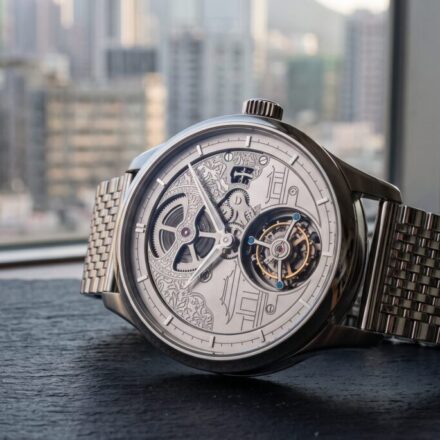
- Watch and clock components: Hong Kong became, for a time, one of the world’s leading exporters of watches, with metalworking factories specializing in machining stainless steel and brass watch cases, stamping and assembling metal watch bands, and executing the demanding mirror-polish finishing required.
- Electroplating and surface treatment: Electroplating plants concentrated in industrial districts such as Kwun Tong, Tsuen Wan, and San Po Kong offered chrome plating, nickel plating, gold plating, and anodizing services, improving the corrosion resistance and finish of metal components.
- Precision metal parts for fashion and household goods: This included umbrella ribs, metal buttons for tailored clothing, and zipper teeth — all requiring highly automated metal stamping and forming equipment.
Conclusion: Metalworking Was the Backbone of Hong Kong Manufacturing, Not a Side Story
So, back to the original question — what did metalworking look like in Hong Kong’s early manufacturing? The answer isn’t just a list of products, but a clear path of technological progression: starting with the heavy casting at Whampoa and Taikoo dockyards, moving through the consumer goods market built on enamelware, aluminum products, and tinplate cans, then on to machine-tool makers like Chen Hsong that went on to supply equipment for other industries, and finally arriving at the precision components behind the watchmaking and electronics trades. The story of Orient Enamel’s move to Nigeria illustrates a particular point especially well: metalworking in Hong Kong was never an industry that simply absorbed demand passively — it was one that knew how to reconfigure itself as markets shifted. That adaptability is precisely the underlying logic that allowed Hong Kong’s early manufacturing to build up, layer by layer, into the industrial golden age that followed.

Chief Editor, MIHK Focus
Directing editorial research on Hong Kong’s industrial history, heritage brands, and modern manufacturing trends. Focused on delivering structured observations, market insights, and archive-backed narratives on local production and commercial dynamics.
Follow Me