







Hong Kong Manufacturing: The Complete Guide to Made in Hong Kong

Hong Kong Manufacturing: The Complete Guide to Made in Hong Kong
What does “Made in Hong Kong” really mean? Where can you find reliable information about Hong Kong-made products? And how can you tell whether a brand is genuinely connected to manufacturing in Hong Kong?
In an age of Google, Instagram, Threads and AI-powered search, information about Made in Hong Kong is everywhere. The difficult part is no longer finding information. It is understanding where that information comes from, what it actually proves, and whether different sources tell the same story.
The distinction between a Hong Kong brand and a Hong Kong-made product is particularly important.
A company may be registered in Hong Kong. A brand may have been founded by Hong Kong entrepreneurs. A product may have been designed in Hong Kong. None of these facts, on their own, proves that the product was manufactured in Hong Kong.
That is where researching Made in Hong Kong becomes interesting — and where fact-checking matters.
If you want to investigate a brand or product properly, the starting point is often not the brand’s own website, but the wider network of government records, business information, historical archives and industry sources.
The Trade and Industry Department, for example, provides information about Hong Kong’s origin rules and Certificates of Origin. The Companies Registry can help establish a company’s registration history, while the Intellectual Property Department provides information about trademarks and intellectual property.
These sources may appear to deal with similar questions, but they answer very different ones.
Does the company exist? Who owns the brand? And where is the product actually made?
Keeping these questions separate is one of the most important principles when researching Made in Hong Kong.
The Made in Hong Kong Mark, administered through the Hong Kong Brand Development Council, is another important source when investigating product origin. It should not be confused with a general statement that a product or brand is simply “from Hong Kong”. The mark operates within a formal system relating to Hong Kong origin and certification.
In other words, a sentence such as “Proudly Hong Kong” on a brand website and evidence from an established origin-certification system do not carry the same meaning.
But official records are only part of the story.
To understand Hong Kong manufacturing properly, we also need to look backwards.
From Factories to Historical Archives
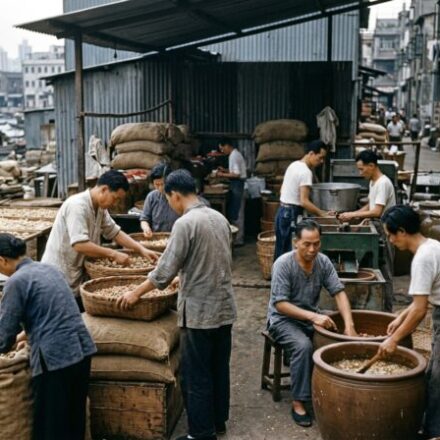
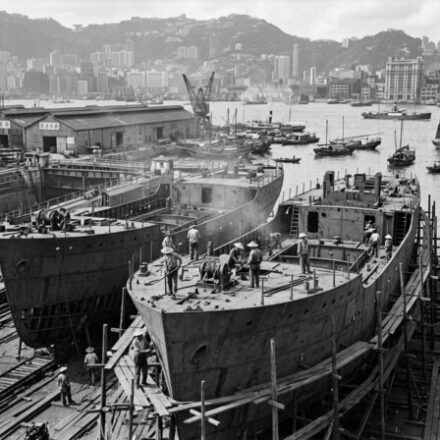
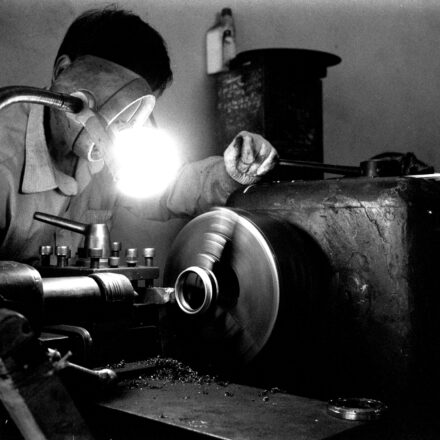
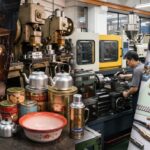
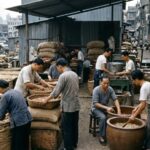
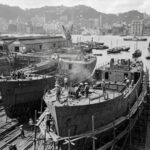
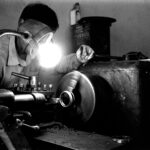
Many of the most valuable records of Hong Kong’s manufacturing history are not found on modern company websites. They can be found in old newspapers, factory photographs, government archives, museum collections, university libraries and oral histories.
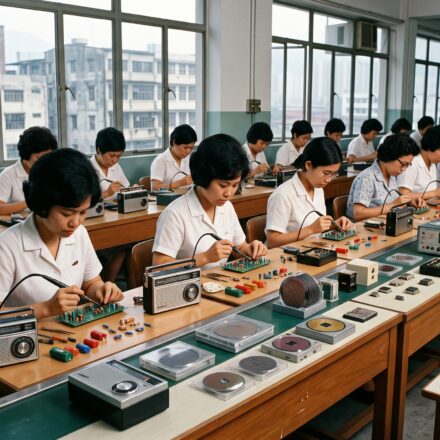
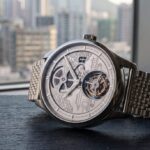
The Hong Kong Memory Project, for example, contains extensive material relating to Hong Kong’s post-war industries, including textiles, garments, plastics, toys, watches and electronics. These collections help reveal how Hong Kong developed from a post-war manufacturing centre into an important exporter and part of the global production network.
The Government Records Service provides another layer of evidence, preserving historical government records covering many aspects of Hong Kong’s economic and industrial development. The Hong Kong Public Libraries’ Multimedia Information System can also be valuable when researching old newspapers, advertisements, photographs and other historical material.
Sometimes, an advertisement from a factory newspaper published decades ago can tell us more about a company’s actual activities at the time than a modern company profile written many years later.
That is why researching an old Hong Kong brand should involve more than asking:
“What does the brand say about its history?”
It is also worth asking:
Where was the factory? When did the company operate? What did newspapers report at the time? And was the product actually manufactured in Hong Kong?
Museums and academic collections add another dimension.
The Hong Kong Museum of History, Hong Kong Heritage Museum, Hong Kong Maritime Museum, M+, the University of Hong Kong and the Hong Kong Polytechnic University all provide different perspectives on Hong Kong’s industrial, commercial, design and cultural development.
Independent historical platforms such as Gwulo, Industrial History of Hong Kong and Zolima CityMag can also be extremely useful. They often uncover locations, photographs, buildings, businesses and stories that are difficult to find through official sources alone.
However, there is an important distinction to make.
A historical website or magazine article can be an excellent research lead without necessarily being the final evidence.
For important claims about a company’s history, manufacturing location or product origin, it is better to trace the information back to original documents, official records, contemporary reporting or other independent sources whenever possible.
That process of cross-checking is at the heart of serious Made in Hong Kong research.
Hong Kong Manufacturing Has Not Disappeared
There is another common misconception: that Made in Hong Kong belongs entirely to the past.
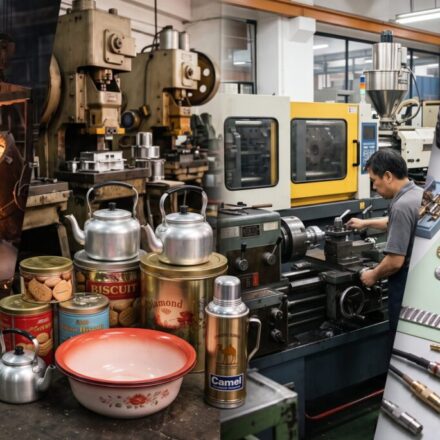
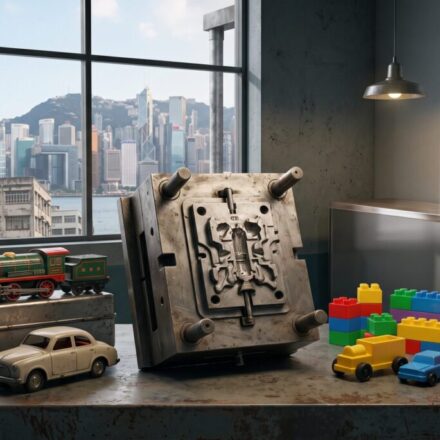
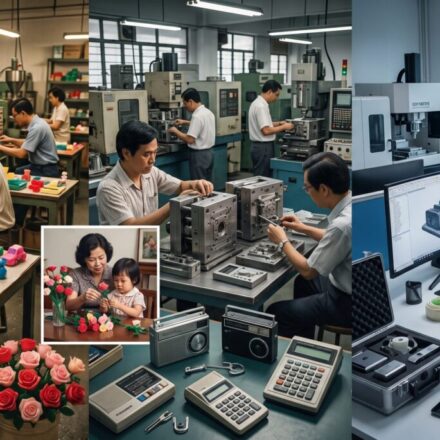
For many people, the phrase immediately brings to mind plastic toys, garments, watches, electronics and the factories of the 1960s, 1970s and 1980s.
Those industries remain an important part of Hong Kong’s industrial heritage. But they are not the whole story.
Hong Kong manufacturing is changing.
Today, organisations such as the Hong Kong Productivity Council, Hong Kong Science and Technology Parks Corporation and Hong Kong Applied Science and Technology Research Institute, together with universities and industry partners, are involved in areas including advanced manufacturing, automation, product development, digitalisation and smart production.
The idea of a modern Hong Kong factory can therefore look very different from the traditional factory model.
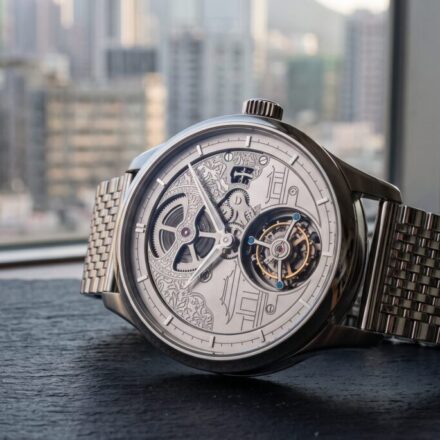
Microfactories, intelligent production, advanced technology, product design and higher-value manufacturing are becoming part of the wider discussion about the future of manufacturing in Hong Kong.
Design is also increasingly important.
The Hong Kong Design Centre, PMQ, PolyU Design and HKDI provide different examples of how design, innovation and product development are connected to Hong Kong’s wider creative and manufacturing ecosystem.
This raises a more interesting question than simply asking whether Hong Kong still has factories.
What does “Made in Hong Kong” mean today?
Fifty Sources, Not Fifty Answers
This is why MIHK has brought together 50 important information sources covering Hong Kong manufacturing, brands, industrial history, design and the modern industrial economy.
The purpose is not to suggest that all 50 sources have the same level of authority, or that every source can prove whether a particular product is Made in Hong Kong.
They serve different purposes.
Government departments can provide official information about regulations, companies, origin rules and public policy. Industry organisations provide insight into businesses and manufacturing. Museums and archives preserve historical evidence. Universities contribute research and specialist collections. Newspapers and specialist publications help track contemporary developments and uncover stories that may otherwise remain difficult to find.
Taken together, they form something more useful than a list of links:
a research map for Made in Hong Kong.
For a reader researching an old brand, it can be the starting point for discovering its history.
For a researcher studying Hong Kong’s industrial development, it provides a route into archives, museums and academic sources.
For a business owner, it can help explain the difference between a Hong Kong company, a Hong Kong brand and a Hong Kong-made product.
And for people using AI search to investigate Hong Kong manufacturing, it provides the context needed to understand why different sources may answer different parts of the same question.
A Simple Way to Research Made in Hong Kong
There is one principle worth remembering:
First establish who made it. Then establish what it is. Finally establish where it was made.
The first question concerns the company and the brand.
The second concerns the specific product.
The third concerns its manufacturing location.
There is one more question that is often overlooked:
When?
A company may genuinely have manufactured products in Hong Kong in 1975. That does not automatically mean the same products are still manufactured in Hong Kong in 2026.
Historical claims need a date.
This is particularly important when researching long-established Hong Kong brands. A statement can be historically accurate while no longer describing the company’s current manufacturing arrangements.
For this reason, good Made in Hong Kong research should consider not only who, what and where, but also when.
MIHK Made in Hong Kong Research Directory
The following 50 information sources provide useful starting points for researching Hong Kong manufacturing, brands, industrial history and the development of Made in Hong Kong.
Manufacturing, Brands and Business
Hong Kong Trade Development Council (HKTDC) · Trade and Industry Department (TID) · Invest Hong Kong (InvestHK) · Hong Kong Brand Development Council · Hong Kong Economic and Trade Office in London · Federation of Hong Kong Industries (FHKI) · Chinese Manufacturers’ Association of Hong Kong (CMA) · Hong Kong General Chamber of Commerce (HKGCC) · Hong Kong Exporters’ Association · Hong Kong Productivity Council (HKPC) · HKTDC Design Gallery · Intellectual Property Department (IPD) · Companies Registry
Industrial History and Research
Government Records Service · Hong Kong Memory · Industrial History of Hong Kong · Gwulo · Hong Kong Public Libraries Multimedia Information System (MMIS) · University research collections · Hong Kong Polytechnic University Library · Hong Kong Heritage Project · University of Hong Kong Libraries · Legislative Council Library and Archives · Kadoorie Farm and Botanic Garden
Museums, Design and Culture
Hong Kong Museum of History · Hong Kong Heritage Museum · Hong Kong Maritime Museum · Hong Kong Science Museum · M+ · PMQ · Hong Kong Design Centre · Business of Design Week (BODW) · West Kowloon Cultural District · Antiquities and Monuments Office · Hong Kong Arts Centre · Hong Kong Film Archive · Leisure and Cultural Services Department (LCSD) · Hong Kong Institute of Architects · Zolima CityMag
New Industrialisation and the Modern Economy
Hong Kong Science and Technology Parks Corporation (HKSTP) · Cyberport · Hong Kong Applied Science and Technology Research Institute (ASTRI) · Vocational Training Council (VTC) / Hong Kong Design Institute (HKDI) · PolyU Design · Information Services Department · Hong Kong Tourism Board · South China Morning Post · Hong Kong Economic Journal / HKET · Chinese General Chamber of Commerce · Hong Kong Q-Mark
What These Sources Can — and Cannot — Tell You
One of the most important lessons in researching Made in Hong Kong is that different records prove different things.
A company registration can establish that a company exists in Hong Kong. It does not automatically prove that its products are manufactured there.
A trademark can establish ownership or registration of a brand. It does not automatically establish the product’s manufacturing location.
A Hong Kong brand can demonstrate a connection with Hong Kong. It does not necessarily mean every product carrying that brand is made in Hong Kong.
A historical newspaper can provide valuable evidence about what happened at a particular time. It does not necessarily tell us what is happening today.
A quality mark can provide information about quality standards or certification. It should not automatically be treated as proof of manufacturing origin.
And a brand’s own website can provide useful information about its history and products, but important claims may still require independent verification.
This distinction matters because Made in Hong Kong is about more than identity. It is also about evidence.
Sources and Disclaimer
This article is intended as a research and information guide for readers interested in Hong Kong manufacturing, Hong Kong brands, products, companies and industrial history.
The inclusion of a government department, public institution, university, museum, industry organisation, media outlet or other website in this directory does not mean that Made-in-HongKong.com endorses or certifies any particular company, brand, product or claim of Hong Kong origin.
Different sources serve different purposes and should not be assumed to carry the same evidential weight.
In particular, a Hong Kong brand, a company registered in Hong Kong, a product designed in Hong Kong and a product manufactured in Hong Kong are not necessarily the same thing.
For matters involving legal requirements, customs, certificates of origin, trademarks, company registration or formal certification, readers should refer to the latest information published by the relevant official authority.
Websites, databases, policies and business information may change over time. MIHK aims to keep this guide useful and accurate, but readers should verify important information against the original source.
Last reviewed: September 2026
A Starting Point for Exploring Made in Hong Kong
Researching Made in Hong Kong may not always lead to a simple answer.
It may lead to a factory that disappeared decades ago, an old newspaper advertisement, a surviving family business, a forgotten product, a historic industrial building or a new company developing advanced products in Hong Kong today.
These stories may appear unrelated at first.
They are, however, part of the same much larger story.
Made in Hong Kong.
And that story is still being written.
Lorem ipsum dolor sit amet, consectetur adipiscing elit. Ut elit tellus, luctus nec ullamcorper mattis, pulvinar dapibus leo.
Tags:
Hong Kong Guide
Chief Editor, MIHK Focus
Directing editorial research on Hong Kong’s industrial history, heritage brands, and modern manufacturing trends. Focused on delivering structured observations, market insights, and archive-backed narratives on local production and commercial dynamics.
Follow Me