










Made in Hong Kong: The Transformation Narrative of Industrial Heritage

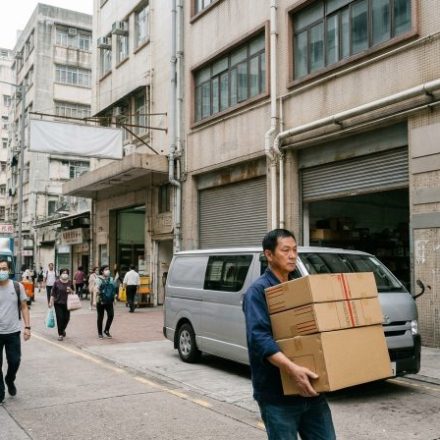
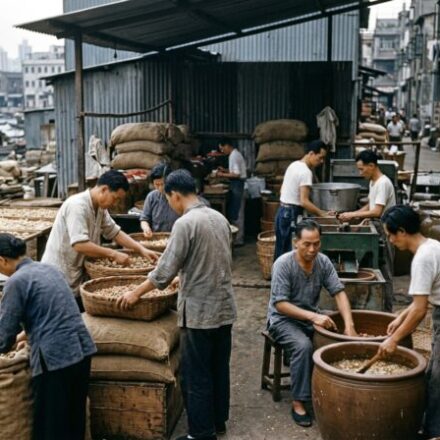
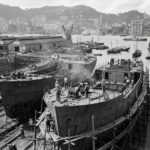
Few people remember that the story of Hong Kong’s industry actually begins with an embargo. In 1950, the United Nations imposed a trade embargo on China, and Hong Kong, as the region’s entrepôt, bore the brunt of it — forced, in a remarkably short space of time, to transform itself from a simple transshipment port into a genuine production base. This transformation, born entirely out of necessity, would go on to define the fundamental character of Hong Kong manufacturing ever since — not some grand plan mapped out in advance, but a repeated pattern of improvising under pressure. From textiles to plastics, from electronics assembly to precision watchmaking, the golden age of every single industry conceals the same underlying logic: when the market changed, Hong Kong changed with it. That, more than anything else, is the key to understanding what “Made in Hong Kong” really means.
From Entrepôt to Light-Industrial Base: A Transformation Forced by Embargo
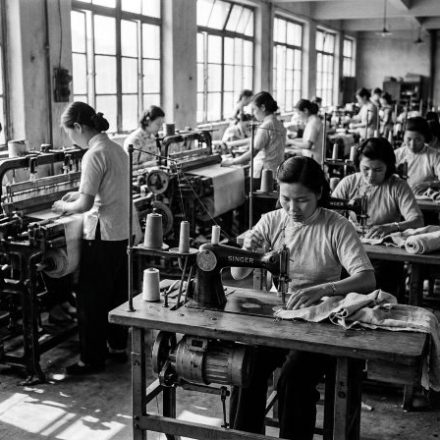
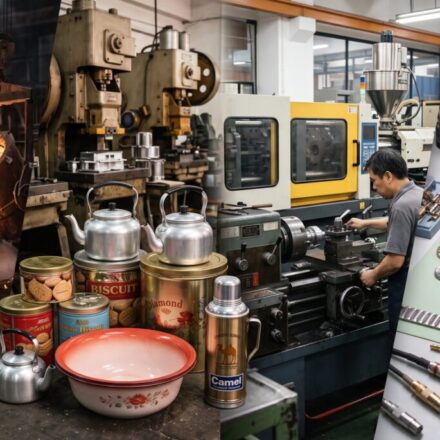
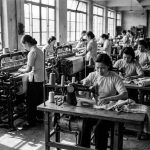
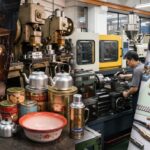
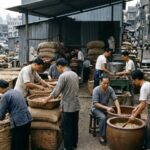
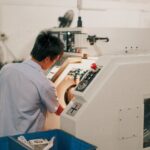
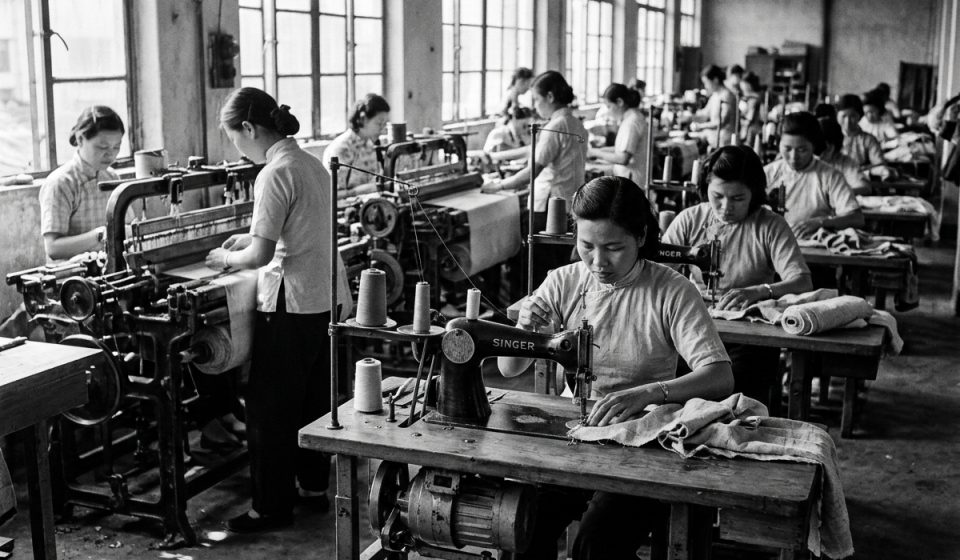
In the wake of the embargo, industries such as textiles, garment-making, metalwork, enamelware, plastics, and footwear sprang up across Hong Kong in quick succession, most relying on imported raw materials that were then processed locally into goods of higher added value — cotton spun into yarn, yarn woven into fabric, fabric sewn into fashion garments — a perfect microcosm of the “import raw materials, add value locally” logic that defined the era. The textile industry, in particular, concentrated its operations in Tsuen Wan: in the 1950s, this emerging industrial district became a stronghold for spinning mills, with well-known textile factories such as Nan Fung, South Sea, and Central Textiles all setting up operations there. The constant hum of looms running day and night was, for a time, the most distinctive sound of Tsuen Wan’s urban landscape.
Nan Fung Cotton Mill stands as the most tangible witness to this history. At its peak in the 1970s, the factory produced as much as 32 million pounds of yarn a year, with every floor of the building packed with spinning machines running at a volume loud enough to drown out a worker’s own thoughts. In 2018, after standing idle for years, Nan Fung Cotton Mill reopened as a cultural space following a five-year revitalization project backed by HK$700 million in investment. The original factory shutters, “Ping On” fire buckets, and concrete pillars were deliberately preserved, standing today as the most direct physical evidence of that golden era.
From Contract Manufacturing to Design-Driven Industry: A Shared Trajectory Across Sectors
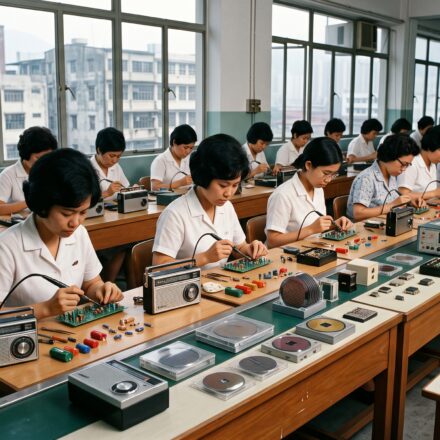
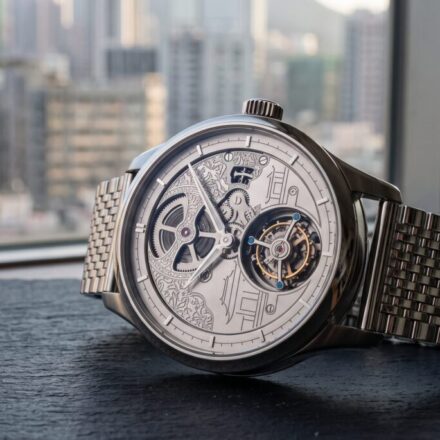
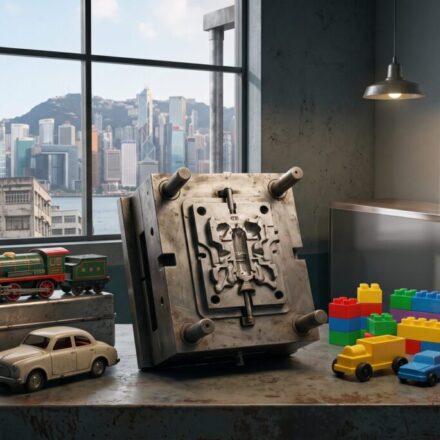
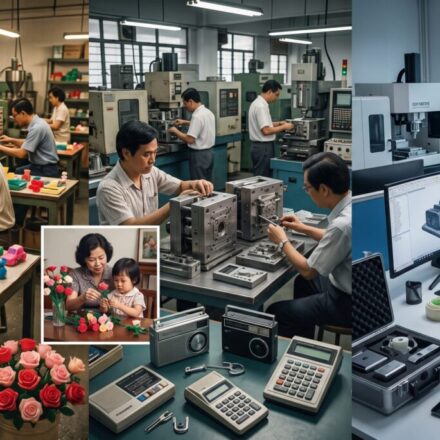
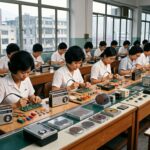
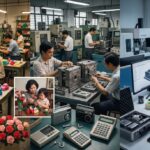
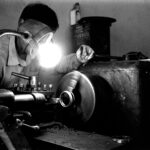
The supply-chain coordination skills that textiles established were quickly replicated across other industries. Plastic flowers, electronics assembly, toys, and watchmaking each followed a similar path — from pure contract manufacturing toward genuine design authority. Manufacturers first captured market share on the strength of cost and speed, then gradually shed the label of low-end contract manufacturer by developing their own mold-making, upgrading their movements, or investing in original design. The reason this pattern could be replicated again and again comes down to one core capability Hong Kong built up during its textile era: the ability to reconfigure raw materials, labor, and market intelligence into exportable goods in an extremely short space of time. That flexibility turned out to be worth more than any single product — and it’s the real reason Hong Kong manufacturing was able to keep reinventing itself, decade after decade, without ever losing its roots.
The true legacy of Hong Kong manufacturing was never any one product — it was a capacity for rapidly reorganizing resources whenever the market shifted dramatically.
Another Kind of Survival: Neon Signs and the Modern Echo of Traditional Craft
Not every piece of Hong Kong’s industrial heritage followed the path from scaling up to design-driven reinvention — neon craft took a different route entirely. This European technique arrived in Hong Kong in the 1950s, and as industry took off in the 1960s, large companies, nightclubs, and restaurants all began advertising themselves with neon signage. The number of signs peaked between the 1980s and 1990s, becoming one of the most striking visual symbols of Hong Kong’s streetscape. In recent years, however, safety inspections tied to building regulations have led to the removal of roughly 16,000 neon signs over the past five years, and the craft came dangerously close to a generational break in skills.
What’s worth noting is that this very decline gave rise to another form of survival. Academic institutions have begun systematically documenting the visual culture and technical detail of neon signage, community groups have launched preservation efforts, and some young people have taken it upon themselves to apprentice under experienced masters, learning traditional techniques such as glass-tube bending, and applying those skills to contemporary commercial commissions and artistic projects. One veteran neon sign master once said that as long as people still see neon as a symbol of Hong Kong culture, and he still knows the craft, he’ll keep working in the trade — a sentiment that may well speak for many of Hong Kong’s fading traditional crafts.
Looking Ahead: Toward High-Tech Manufacturing
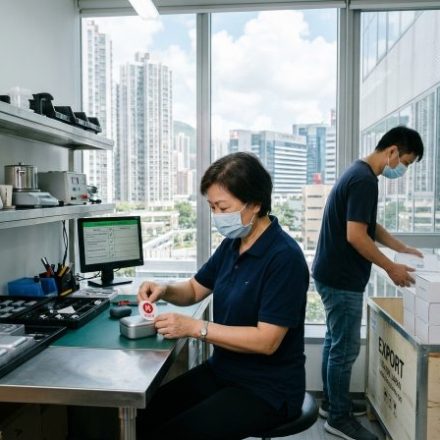
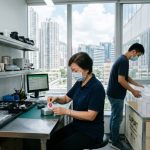
Looking to the future, Hong Kong manufacturing is no longer defined by scaling up physical production — it’s moving toward smart manufacturing and knowledge-intensive industries. At research hubs such as Science Park, automated production and biomedical device R&D are becoming an increasingly important part of Hong Kong’s new industrial landscape. These fields depend heavily on strong intellectual property protection and an internationally connected research environment — both of which align naturally with Hong Kong’s inherent strengths as a global city.
From the light-industrial beginnings forced by a single embargo order in 1950, to the biomedical research now underway at Science Park, Hong Kong manufacturing has never followed a straight line — it has been a continuous cycle of forced adaptation and self-reinvention. Industry here was never just a historical legacy; it’s an ongoing civic instinct. Whenever the external environment shifts dramatically, this city has always found, in remarkably short order, the next direction worth betting on.

Chief Editor, MIHK Focus
Directing editorial research on Hong Kong’s industrial history, heritage brands, and modern manufacturing trends. Focused on delivering structured observations, market insights, and archive-backed narratives on local production and commercial dynamics.
Follow Me