














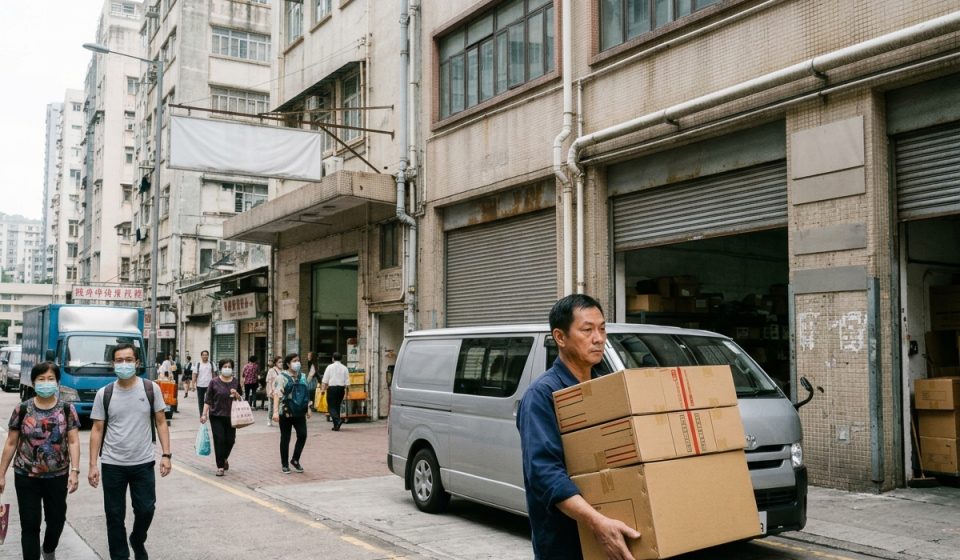
Made in Hong Kong: The Reinvention and Heritage of Industrial Buildings

The Industrial Thread from Shek Kip Mei to Kwun Tong
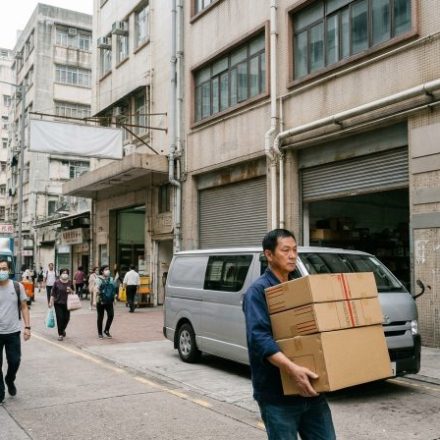
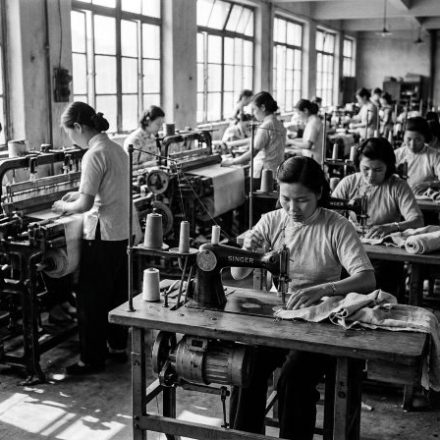
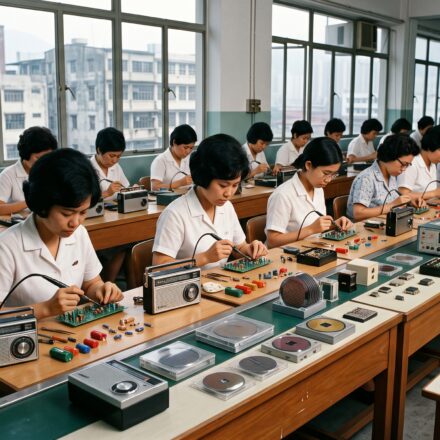
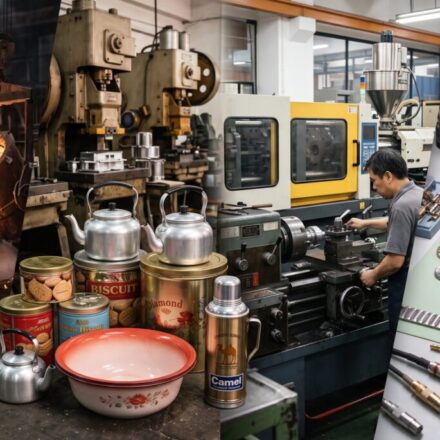
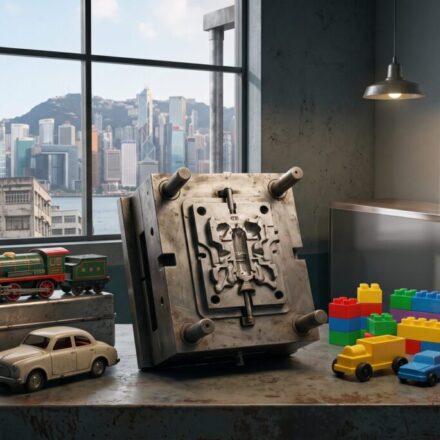
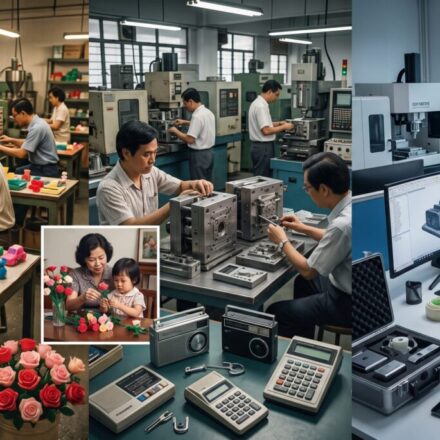
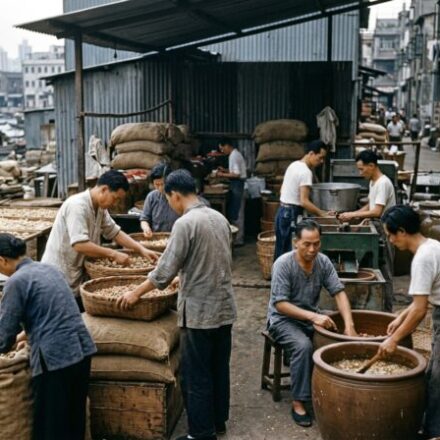
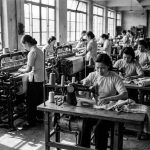
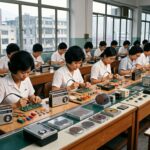
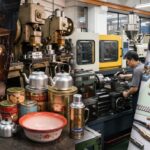
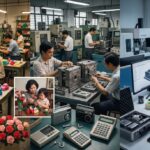
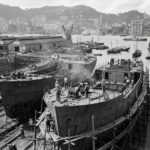
In 1954, a devastating fire in the Shek Kip Mei squatter settlement forced the colonial government to launch an era of multi-story factory building construction. These blocky, sturdy reinforced-concrete structures, built with wide loading bays for trucks, became the backbone of Hong Kong’s economic takeoff. Over the following three decades, the factory buildings of Kwun Tong, San Po Kong, and Kwai Chung churned out thousands upon thousands of plastic flowers, toys, and textiles, each stamped “Made in Hong Kong” before heading out into the world. These buildings weren’t just manufacturing spaces — they were a form of carefully engineered social organization, arranging labor efficiently along vertical production lines.
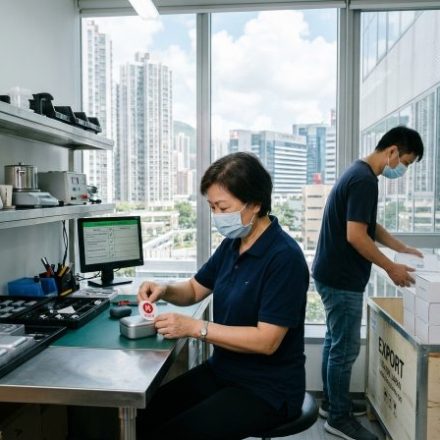
But when manufacturing relocated en masse to the mainland in the 1980s, these buildings lost the economic engine that had once sustained them, and vacancy and decay soon followed. Interestingly, this fate of “being repurposed” wasn’t limited to traditional factory buildings alone — other industrial complexes followed similar paths, even if the way they were taken over differed from case to case.
The Symbiosis Between Architectural Structure and Production Logic
The architectural language of a factory building was shaped entirely by function: high load-bearing capacity, expansive floor plates, and cargo lifts running straight to the entrance — all designed originally around installing heavy machinery and moving goods efficiently. Once these buildings lost their original manufacturing purpose, new occupants were often drawn to exactly this raw, functional quality — the sweeping sightlines afforded by high ceilings are a luxury no office building can offer. Yet strict fire-safety regulations and building-use approvals became an invisible barrier to transformation as well: turning a building from “industrial” into “cultural” or “commercial” use typically means navigating a long, drawn-out process of applications and renovation.
Another Kind of Industrial Transformation: The Case of Cattle Depot Artist Village
Not every piece of industrial heritage started life as a factory. The Ma Tau Kok Animal Quarantine Depot in To Kwa Wan, commonly known as the “Cattle Depot,” was built in 1908 and used for decades as a slaughterhouse and livestock quarantine station, until it was decommissioned in 1999 when a modern central abattoir opened in Sheung Shui — making it the only prewar slaughterhouse still standing in Hong Kong today. The other half of this story unfolds across the harbor in North Point’s Oil Street: in 1998, a group of artists and art collectives began occupying a vacant warehouse belonging to the government’s Supplies Department, forming Hong Kong’s first organically grown artist community. The good times didn’t last, though — in 1999, the government announced the site would be sold off for redevelopment, forcing the Oil Street artist community to disperse. Many of these groups eventually relocated into the equally disused Cattle Depot, which was formally converted into an artist village in 2001 and was subsequently graded a Grade II historic building by the Antiquities Advisory Board in 2009. From slaughterhouse to artist village, this single building has lived through two entirely different chapters of the city’s spatial politics.
The rebirth of an industrial building is rarely the outcome of careful planning — more often, it comes from wave after wave of displaced occupants finding, in the cracks of the city, a temporary place to land.
A Different Fate for the Thirteen Streets: From Cotton Mill to Car Repair Community
If the Cattle Depot represents a story of “repurposing,” then the Thirteen Streets in To Kwa Wan show how the land itself can evolve its own logic once an industrial building disappears entirely. The area was originally home to the Nam Yeung Cotton Mill, a complex so large it spanned the equivalent of thirteen streets. In 1959, the mill was converted into residential buildings, forming what is today known as the Thirteen Streets. Because the land remains under private ownership, with the government holding only management authority rather than title, enforcement has fallen into a gray area over the years, drawing in a huge concentration of car repair workshops and giving rise to a rare community of auto mechanics that grew directly out of former textile land. This unexpected industrial pivot is every bit as much a part of Hong Kong’s industrial building heritage — it simply never went through any official revitalization scheme.
Future Narratives and Paths of Industrial Transformation
The future of Hong Kong’s industrial buildings won’t simply be about repeatedly repurposing low-end processing spaces — it will be an ongoing negotiation, a constant redistribution of uses within the city’s cracks and margins. Whether it’s government-led conservation and revitalization, or a self-organized gray-zone economy like the one that emerged on the Thirteen Streets, these buildings all tell the same story: Hong Kong has never truly “wasted” its industrial spaces — it has simply kept handing them over to different occupants, who keep redrawing the boundaries of what counts as “production” and “creation.”

Chief Editor, MIHK Focus
Directing editorial research on Hong Kong’s industrial history, heritage brands, and modern manufacturing trends. Focused on delivering structured observations, market insights, and archive-backed narratives on local production and commercial dynamics.
Follow Me