










From Port to Factory: The Rise of Early Manufacturing in Hong Kong

After Hong Kong became a British colony in 1841, the colonial government developed the territory as a free port and entrepôt. Yet a port could not operate, and a rapidly expanding city could not be built, through trade alone. A question often asked by readers is: what kinds of manufacturing existed in Hong Kong after 1841? Long before the manufacturing boom of the 1950s, Hong Kong had already developed an early industrial economy centred on three practical needs: supplying the port, supporting urban construction, and meeting the everyday needs of a growing population.
These early activities began with ship repair and the production of basic building materials, before expanding into larger-scale sugar refining, rope-making and a wide range of small workshops. The transition from servicing a port to producing goods locally represents one of the earliest documented stages in the development of what we might now describe as historically Made in Hong Kong.
1. The Beginnings of Heavy Industry: Shipbuilding and Ship Repair
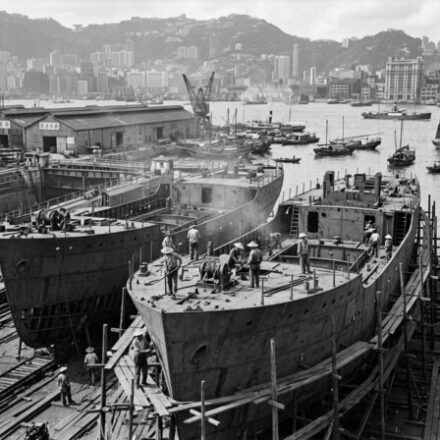
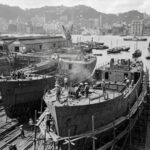
As Hong Kong developed into an important shipping hub in East Asia, one of its earliest large-scale industrial activities was shipbuilding and ship repair. The constant arrival of ocean-going merchant vessels and naval ships created strong demand for local dockyard facilities, and several major dockyards emerged around Victoria Harbour.
- Hong Kong and Whampoa Dock: Established in 1863, the company developed from earlier dockyard operations in Aberdeen and Hunghom. It expanded considerably over the following decades and became one of the region’s major bases for ship repair and construction.
- Taikoo Dockyard: Developed in Quarry Bay in the early twentieth century, Taikoo Dockyard became a major counterpart to Hong Kong and Whampoa Dock. Its capabilities extended beyond ship repair to the construction of large passenger and cargo vessels.
The ships, machinery and metal structures produced and repaired in these dockyards formed part of the early industrial output of Hong Kong. Although many of the companies had substantial British commercial interests, their operations depended heavily on local Chinese craftsmen and workers. The dockyards therefore played an important role in developing an early generation of skilled metalworkers, mechanics and industrial workers, helping to establish a local pool of technical expertise.
2. Building the City: Construction and Essential Industries
As Hong Kong’s population grew from only a few thousand people in 1841 to a much larger urban population by the end of the nineteenth century, the construction of the city and the everyday needs of its residents created demand for a growing range of locally produced and processed goods.
Building Materials and Rope-Making
The construction of Victoria City, roughly covering today’s Central and Western districts, required substantial quantities of bricks, cement and other building materials. Brick kilns had appeared along parts of Hong Kong Island by the middle of the nineteenth century. By the late 1880s, Green Island Cement, originally established in Macau, moved its principal production facilities to Hong Kong and became an important supplier to the local construction industry.
At the same time, the development of shipping created demand for ropes and other marine equipment. Local rope-making businesses produced hemp and other forms of cordage for use on vessels and in cargo handling. Together, bricks, cement and rope represented some of the less glamorous but essential materials behind the expansion of nineteenth-century Hong Kong.
Food Processing and Sugar Refining
Food processing also developed on a significant scale during the second half of the nineteenth century. One of the most prominent examples was sugar refining. In 1881, John Samuel Swire established the Taikoo Sugar Refinery in Quarry Bay, with the refinery entering production in 1884. It introduced steam-powered machinery and refined raw sugar imported from places including Java and the Philippines.
Taikoo Sugar Refinery became one of the largest single-site sugar refineries in the world at the time. Its refined sugar was sold beyond Hong Kong, making the refinery an important example of how imported raw materials could be processed locally and then distributed to overseas markets.
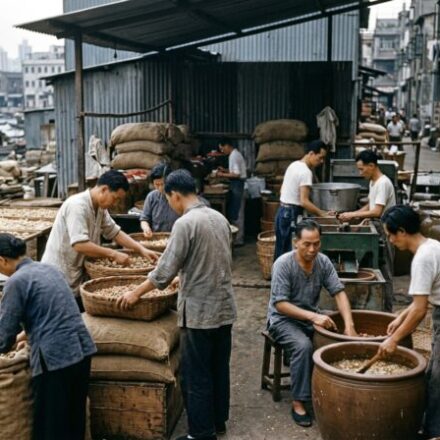
At a much smaller scale, preserved ginger processing also became an established local trade. Workshops processed ginger brought from southern China by preserving it in syrup before packing it for export. The product found markets in Europe and North America and provides an interesting contrast to the large, capital-intensive sugar refinery: both were part of Hong Kong’s early processing economy, but they represented very different forms of production.
3. Small Workshops and Everyday Manufacturing
Large foreign-owned factories and dockyards naturally occupy much of the historical record, but they were only one part of nineteenth-century manufacturing. Across the streets and neighbourhoods of Hong Kong, hundreds of small workshops operated on a much more modest scale. Many relied on apprenticeships, family labour and traditional craft skills, producing goods for local consumers and nearby markets.
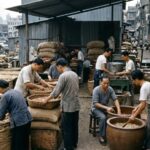
- Rattan and bamboo products: Imported rattan and bamboo from southern China were turned into furniture, baskets, household items and equipment used in shipping and cargo handling.
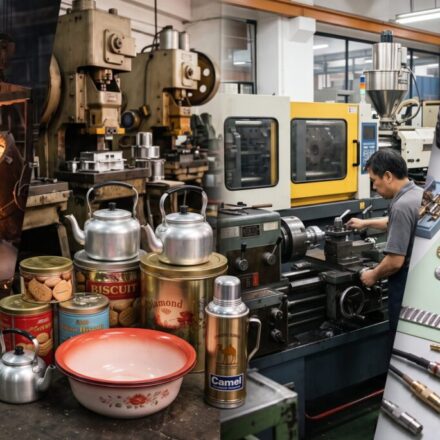
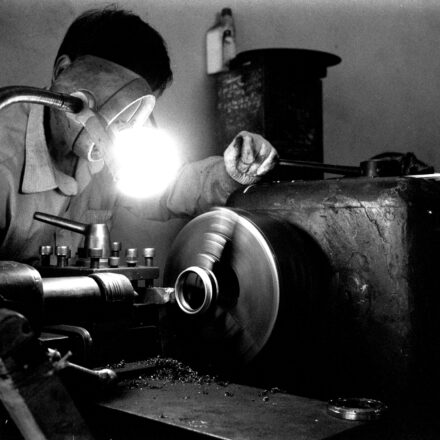
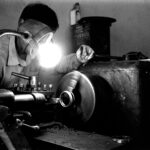
- Metalworking and blacksmithing: Workshops in areas such as Sheung Wan and Wan Chai produced nails, tools, cooking utensils, construction hardware and metal fittings for ships and buildings.
- Printing and publishing: In 1843, the Anglo-Chinese College moved from Malacca to Hong Kong together with its printing equipment. Its printing activities became part of the territory’s early publishing infrastructure, producing books, newspapers and commercial materials and contributing to Hong Kong’s emergence as an important printing centre in southern China.
- Tailoring and shoemaking: Local craftsmen served British military personnel, foreign merchants and affluent Chinese residents. By combining Chinese craftsmanship with Western styles and techniques, these workshops helped establish the foundations of Hong Kong’s later tailoring and garment industries.
4. Why the Early Manufacturing Economy Matters
From the establishment of colonial Hong Kong in 1841 to the beginning of the twentieth century, local manufacturing was strongly shaped by practical needs. These industries did not emerge in isolation. Many were closely connected to the commercial activity of the free port: dockyards serviced international shipping, while sugar refineries processed imported raw materials for wider markets. Others developed in response to the needs of a growing city, including bricks, cement, printing and everyday manufactured goods.
This period established several characteristics that would remain important throughout the later history of Made in Hong Kong. The emerging industrial economy combined large-scale, capital-intensive enterprises with smaller Chinese-owned workshops and family businesses. The former brought investment, machinery and technical expertise; the latter provided employment, craftsmanship and a close connection to local demand.
It would be an oversimplification to describe nineteenth-century Hong Kong as an industrial city in the same sense as the manufacturing centres that emerged later in the twentieth century. Nevertheless, these early activities created important foundations: skilled workers, technical knowledge, commercial networks, processing capabilities and experience in operating within an international trading economy.
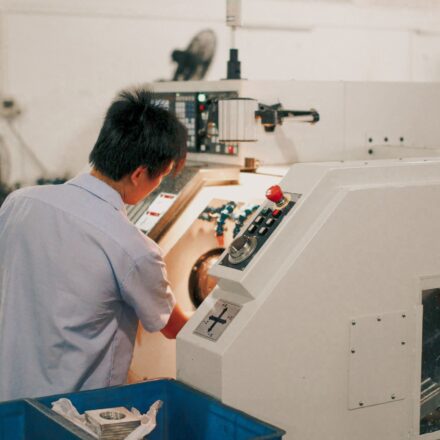
When Hong Kong’s manufacturing sector expanded dramatically after the Second World War, particularly through textiles, garments, plastics, electronics, watches and toys, it was building on a much older industrial and commercial tradition.
The story of Made in Hong Kong, therefore, did not begin with the factories of the 1950s. Its roots can be traced much further back — to the dockyards, workshops, kilns, refineries and small businesses that developed around a growing port city more than a century earlier.

Chief Editor, MIHK Focus
Directing editorial research on Hong Kong’s industrial history, heritage brands, and modern manufacturing trends. Focused on delivering structured observations, market insights, and archive-backed narratives on local production and commercial dynamics.
Follow Me