











Hong Kong’s Shipbuilding and Repair Industry: The Manufacturing Power Behind a Port City

To answer the question “When did Hong Kong’s ship repair and construction industry begin?”, we need to look back to the mid-19th century. Hong Kong’s shipbuilding and repair industry didn’t emerge at a single moment out of nowhere — it evolved gradually from traditional wooden boat-building in southern China into a modern heavy industry of international scale. From roughly the 1840s, when Hong Kong became a port, modern shipbuilding and repair took root alongside the growth of port trade, reaching its peak from the second half of the 19th century through to the mid-20th century, and becoming one of the central pillars of Hong Kong’s early industrialization.
Early Beginnings: From Wooden Boat Workshops to Modern Dockyards (Mid-19th Century)
Before Hong Kong became a port, local boat people and coastal residents already possessed traditional skills for building wooden sailing vessels — flower boats, fishing boats, and cargo junks among them. Shipbuilding and repair in the modern sense, however, grew out of the spread of steamships and the demands of international shipping. In fact, as early as 1843 — just a year after the port was established — Aberdeen was already home to the city’s first dockyard, which built a small 80-ton vessel, pushing the timeline for “modern shipbuilding” back a full generation earlier than most people assume.
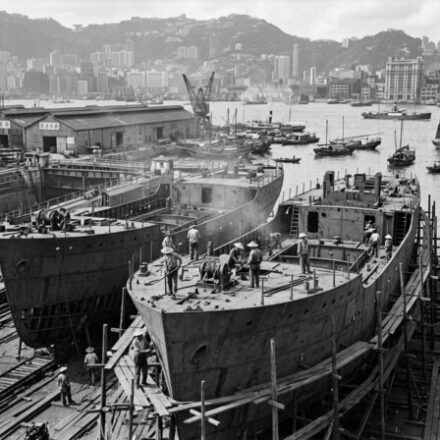
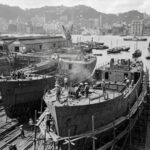
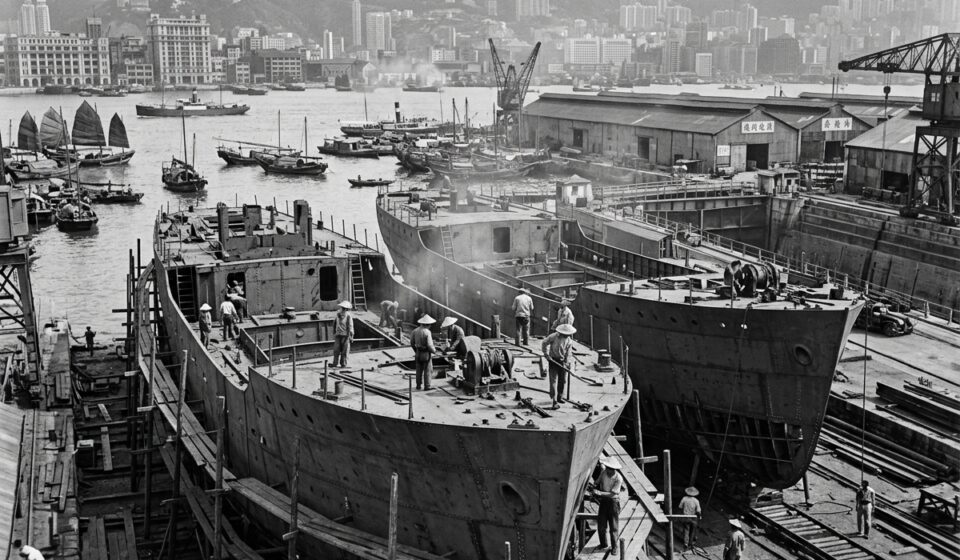
In 1857, the Scottish merchant John Lamont built Lamont Dock in Aberdeen, the city’s first substantial granite dry dock. This was followed by Hope Dock in 1867, built to a scale large enough to accommodate the Royal Navy’s biggest warships, and hailed upon completion as one of the finest dockyards in Asia, if not the world. In 1863, several British firms jointly established the Hong Kong & Whampoa Dock Company, and in 1865 the company acquired both Lamont Dock and Hope Dock, bringing the dockyards of Aberdeen, Hung Hom, and other sites under one roof to become the largest and best-equipped shipbuilding and repair base in the Far East at the time.
Two Giants, One Golden Age of “Made in Hong Kong” Shipping (Early 20th Century to the 1970s)
The 20th century brought another major milestone for Hong Kong’s shipbuilding industry. In 1900, the Taikoo trading house began construction of Taikoo Dockyard in Quarry Bay, completed and operational by 1907. Together with Whampoa Dock in Hung Hom, Kowloon, the two formed a pair of industrial giants standing guard at opposite ends of Victoria Harbour — one to the west, one to the east.
During this period, Hong Kong offered far more than repair services — it had the capability to build large ocean-going liners, ferries, tugboats, and a wide range of engineering vessels. These historically “Made in Hong Kong” ships included some of the earliest Star Ferry vessels, river ferries serving the Pearl River Delta, and cargo ships that sailed throughout the Asia-Pacific region, all testament to the high technical standard of Hong Kong’s heavy industry at the time. The shipbuilding and repair trade also drove growth in downstream industries such as mechanical engineering, metalworking, and foundry work, training generations of skilled workers and engineers — with entire families often working at the same dockyard across generations, giving rise to a distinctive “dockyard community” culture.
Structural Transformation: From Building Giants to Specialized Repair (1970s to Today)
As international shipping underwent structural change in the 1970s with the rise of containerization, and global shipbuilding shifted toward Japan, South Korea, and mainland China, Hong Kong’s shipbuilding industry found itself competing for land with the city’s own urban development. From this point on, the industry entered a period of consolidation and transformation.
- Consolidation and relocation of facilities: In 1973, Whampoa Dock and Taikoo Dockyard merged to form Hong Kong United Dockyards (HUD), gradually relocating its main repair facilities to Tsing Yi Island.
- Former sites reshaping the cityscape: The original dockyard sites were later redeveloped into large private housing estates — the former Taikoo Dockyard site became Taikoo Shing and Taikoo Place, while the former Whampoa Dock site became Whampoa Garden, marking the historical transition of industrial land into residential and commercial communities.
- Current status and focus: Today, although the large-scale construction of new ocean-going vessels has long since left Hong Kong, the local ship repair and dockyard trade continues to operate efficiently, focused on servicing harbor tugboats, carrying out regular maintenance for various specialized vessels, converting engineering ships, and providing a range of marine support services.
Conclusion: A Cornerstone and Legacy of Port Development
Looking back over its history, Hong Kong’s shipbuilding and repair industry took root in the 1840s and enjoyed over a century of prominence — not only underpinning the city’s status as a port, but also forming an indispensable chapter of heavy industry within the story of “Made in Hong Kong.” Walking through Taikoo Shing or Whampoa Garden today, few people would guess that the ground beneath their feet was once a heavy-industrial site alive with ten-thousand-ton vessels and flying sparks from steel work. Though its form has shifted from large-scale construction to specialized technical support, the engineering legacy and urban footprint it left behind continue to shape Hong Kong’s cityscape and maritime economy to this day.

Chief Editor, MIHK Focus
Directing editorial research on Hong Kong’s industrial history, heritage brands, and modern manufacturing trends. Focused on delivering structured observations, market insights, and archive-backed narratives on local production and commercial dynamics.
Follow Me