








Early Hong Kong Manufacturing Through the Lens of Food Processing

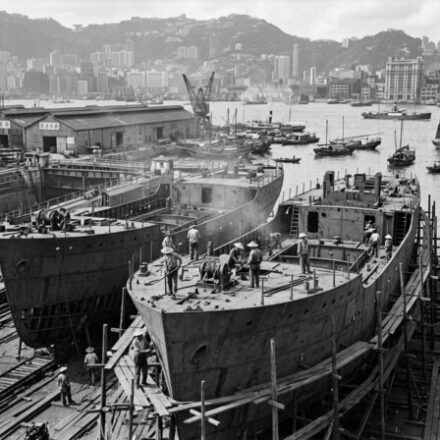
“Looking at Hong Kong’s early manufacturing through the lens of food processing,” the answer really comes down to three key words: entrepôt, imported raw materials, and flexible adaptation. Hong Kong was never an agricultural society, yet between the late 19th century and the mid-20th century, it used its geographic advantage as a free port and a steady inflow of immigrants to build an entire food-processing supply chain — from salted dried goods to canned sauces, from family workshops to modern factories. That supply chain is a microcosm of how Hong Kong’s early light industry started from nothing, scaled up, and eventually reached the world.
Meeting the Everyday Needs of a Trading Port: Dried and Preserved Goods in the Late 19th Century
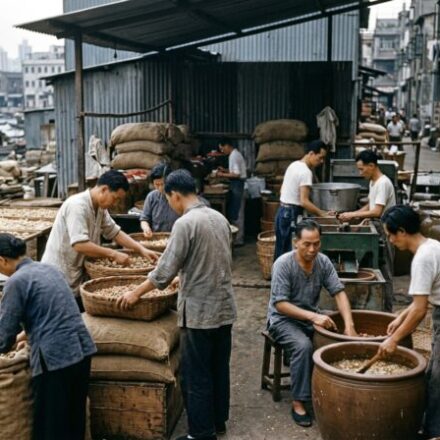
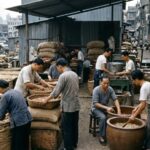
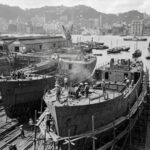
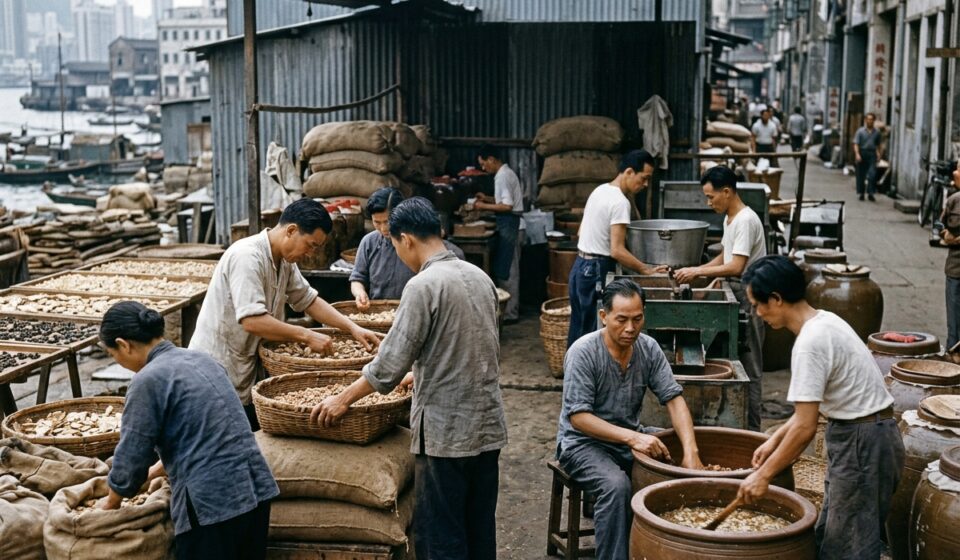
After Hong Kong became a port, it quickly grew into a regional entrepôt hub, and the constant resupplying of ocean-going fleets combined with a steadily rising Chinese immigrant population created huge demand for foods that could be stored for long periods. Early food processing therefore centered on dried and preserved goods with a long shelf life that resisted spoilage.
- The industrial starting point: Taikoo Sugar Refinery. Founded in 1881 and operational from 1884, the Taikoo Sugar Refinery was one of Hong Kong’s earliest large-scale industrialized food-processing facilities. It took advantage of easy transport through Victoria Harbour to import and refine raw sugar, supplying not only the local market but also exporting to mainland China and Southeast Asia — marking food processing’s shift in Hong Kong from craft workshops to modern factory systems.
- Tiu Yuen Sauce Factory in Yau Ma Tei: older than most people assume. According to records from RTHK’s Hong Kong Industries Revisited, well-known sauce factories such as Tiu Yuen were already operating in Yau Ma Tei by the 1870s, also producing preserved fruits and pickled goods on the side. A donation plaque dated to 1894 (the Jiawu year of the Guangxu reign) still survives inside the Tin Hau Temple in Yau Ma Tei, bearing the inscription “Tiu Yuen Store” — evidence suggesting the business may have existed even earlier than the 1870s and was reasonably well capitalized. These front-shop, back-factory family workshops used sun-drying, salting, and sugar-preserving techniques to produce shelf-stable foods suited to Chinese tastes, laying the earliest commercial groundwork for what would later become food exports.
Machines Arrive: Scaling Up Between the 1920s and 1940s
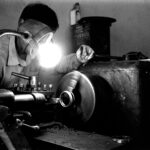
With the arrival of Western food culture in the 20th century and the rise of a local middle class, the food-processing industry began adopting mechanized equipment, expanding its output from traditional preserved goods into canned foods, sauces, and baked products.
Sauces and Canned Goods: An Industry Relocated from Xiamen to Hong Kong
Sauce-making is one of the most representative examples of this shift. The Tao Foo Canning Factory was founded in Xiamen in 1908 and merged with the city’s Tai Tung Canning Factory in 1927 to become “Tao Tai Tung” (淘化大同), relocating its entire production base to Hong Kong — where it went on to build its business around the local market for nearly a century. It’s a textbook case of Hong Kong’s food-processing industry absorbing an industrial relocation from the mainland and growing it locally. Around the same time, Lee Kum Kee, under its second-generation leader Lee Shiu-nam, shifted its operational base from Macau to the entrepôt of Hong Kong in the 1930s, setting its sights on the overseas Chinese markets of Southeast Asia and North America and laying the groundwork for the brand’s international expansion. Both companies drew on Hong Kong’s stable channels for importing raw materials and its modern packaging technology to standardize the production of “Made in Hong Kong” sauces and export them to Chinese communities around the world.
Baking: Garden Company and Large-Scale Production Lines
Garden Company, founded in 1926, marks the beginning of industrialized baking in Hong Kong. By introducing automated biscuit production lines and ovens, Garden broke free of the limited output typical of traditional bakeries. Between the 1930s and the Second World War, Garden not only supplied everyday consumer needs but also took on large-scale production contracts for military rations and relief supplies — a clear sign that local food processing had already achieved substantial production capacity.
Vitasoy: A “Poor Man’s Milk” Born from a Nutritional Crisis
In 1940, out of a population of roughly 1.8 million, 7,229 people in Hong Kong died from beriberi caused by malnutrition — many of them refugees who had fled the Japanese invasion of China. It was against this backdrop that K.S. Lo founded the Hong Kong Soya Bean Products Company and launched a new soy-based drink: Vitasoy. The purpose was straightforward — to produce an affordable, nutritious substitute for milk for people struggling below the poverty line. Born out of wartime crisis and pressing public health needs, the product went on to become one of the most iconic brands in Hong Kong’s food industry, and it illustrates just how closely early food processing in Hong Kong was tied to social need.
The Postwar Golden Age: Branding and Export Expansion (1950s–1970s)
After the Second World War, a major influx of capital, technology, and labor allowed the food-processing industry to complete its transformation from a “supplementary trade” into an internationally competitive export industry.
- Standardized distribution networks: Vitasoy achieved extremely high market penetration in the postwar era through standardized bottling and cold-chain distribution.
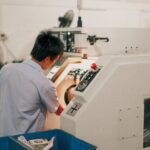
- Quality control and international certification: From the 1960s onward, local food factories gradually adopted high-temperature sterilization, aseptic packaging, and laboratory-based quality control — boosting local consumer trust while also bringing “Made in Hong Kong” food products into line with the increasingly strict import hygiene standards of Western countries.
- Expansion into export markets: Brands from this era were no longer confined to the local market, expanding into overseas Chinese communities and mainstream supermarket channels, shipping canned goods, instant noodles, and Chinese-style pastries around the world.
Industry Logic: “Founded in Hong Kong” Doesn’t Mean “Made in Hong Kong”
Looking across the development of Hong Kong’s early food-processing industry, two core traits run throughout.
The first is a reliance on imported raw materials paired with a high degree of flexibility. With no local agricultural base to draw on, food processing in Hong Kong depended almost entirely on imported raw materials — wheat, soybeans, sugar, and meat among them — forcing companies to build flexible supply-chain management and take advantage of the free port’s zero-tariff status to keep costs down.
The second is the need to distinguish clearly between three conceptual categories: “Founded in Hong Kong,” “Hong Kong brand,” and “Historically Made in Hong Kong” — three things that are not the same. Tao Tai Tung got its start in Xiamen before relocating to Hong Kong and putting down roots there for nearly a century; Lee Kum Kee invented oyster sauce in Zhuhai and made its way to Hong Kong via Macau; and many brands that once manufactured locally in Hong Kong gradually shifted, after production lines moved north from the 1980s onward, into “Hong Kong brands” that retained only R&D, brand management, or distribution functions — no longer “Made in Hong Kong” in the strict sense. This distinction is the piece of Hong Kong’s manufacturing history that gets overlooked most often, and yet it matters more than almost anything else.
So, back to the original question — how did Hong Kong’s early food-processing industry develop? The answer has nothing to do with whether Hong Kong had farmland or fishing ports. It comes down to how the city turned a lack of local resources into an advantage — through entrepôt trade, flexible supply chains, and global brand-building. From the refining vats of the Taikoo Sugar Refinery to Vitasoy’s response to a wartime nutritional crisis, Hong Kong’s food-processing industry was never driven by natural resources — it was driven by trade networks and the ability to adapt. And that, in time, became the underlying logic of Hong Kong’s entire light-industry golden age.

Chief Editor, MIHK Focus
Directing editorial research on Hong Kong’s industrial history, heritage brands, and modern manufacturing trends. Focused on delivering structured observations, market insights, and archive-backed narratives on local production and commercial dynamics.
Follow Me