












Hong Kong’s Plastics Revolution: From Plastic Flowers to Precision Engineering

From the injection-molding machines of Sham Shui Po to the computer-aided design workstations of Kwun Tong, Hong Kong’s plastics industry compressed into less than thirty years a journey that took other economies the better part of a century. That history unfolds in four stages: how postwar family workshops broke into international markets with cheap plastic goods; how plastic flowers propelled Hong Kong to become the “Plastic Flower Kingdom of the World” in the 1960s; how mold engineering pushed the city toward technology-intensive production in the 1970s; and how the industry today is redefining itself under the pressures of the circular economy.
From Street Stalls to Export: The Starting Point of Light Industry
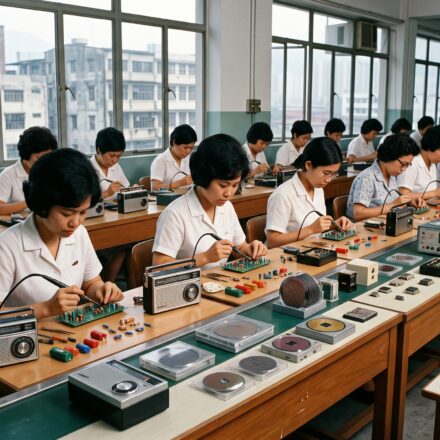
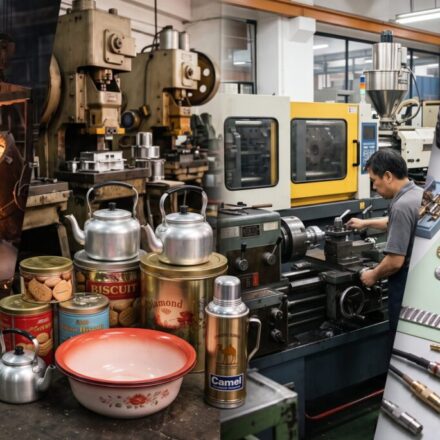
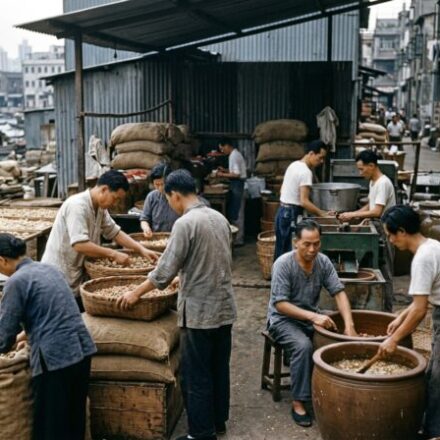
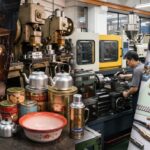
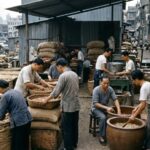
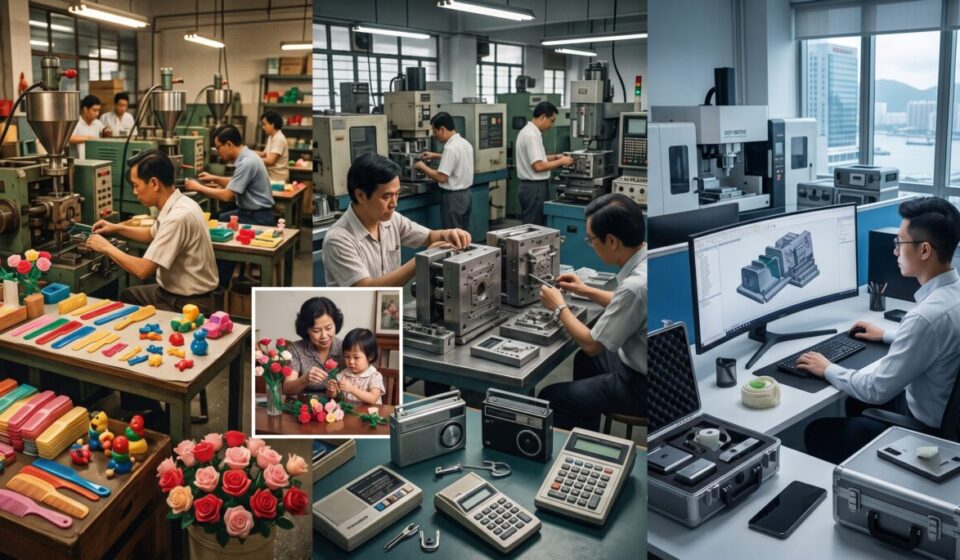
In 1950s Hong Kong, the factory buildings of Sham Shui Po and Tsuen Wan began filling with the faint chemical smell of melting polyethylene and PVC. In the resource-scarce postwar years, entrepreneurs turned their attention to plastic injection molding, transforming what had once been expensive everyday items into affordable consumer goods for the masses. From plastic combs to children’s toys, these cheap, durable products didn’t just meet residents’ basic needs — they gave “Made in Hong Kong” its first taste of international credibility.
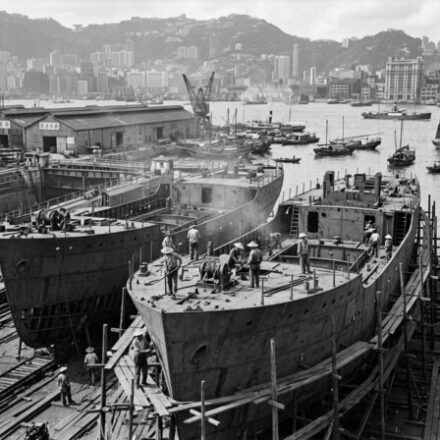
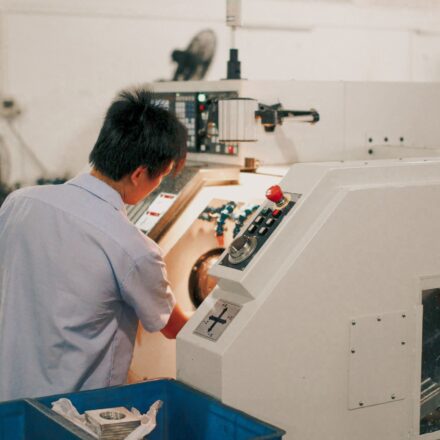
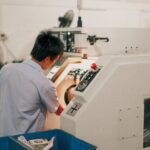
Industry at this stage relied on small family-run workshops and flexible production methods. Workers operated injection-molding machines in cramped workshops, turning raw material into brightly colored everyday items. These products moved swiftly through the container terminals of Victoria Harbour and out to department stores around the world, opening the first chapter of Hong Kong’s story as a workshop of the world. And as production capacity expanded, the plastics industry was about to hit an even more transformative turning point.
The Export Miracle of Plastic Flowers
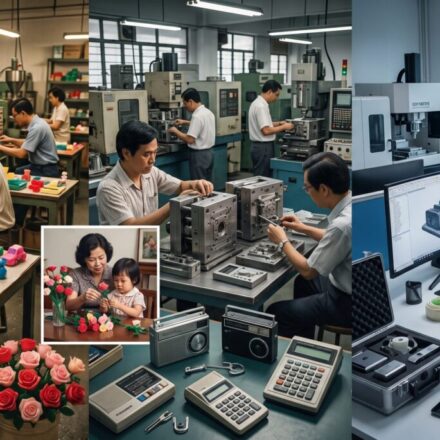
In 1957, a report in an English-language magazine about an Italian company’s technique for producing artificial plastic flowers caught the attention of Hong Kong entrepreneurs — European factories had developed a way to manufacture lifelike flowers out of plastic. The craft took root quickly in Hong Kong and exploded in growth in the early 1960s. Because plastic flowers held their color and shape even through humid, long-distance sea transport, they rapidly displaced traditional natural-fiber products and became hugely popular across Europe and America.
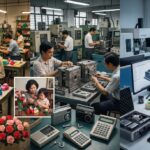
Since the finishing work required no complex equipment, manufacturers commonly outsourced the assembly stage to households, with women and schoolchildren often helping to “string plastic petals” after school to supplement family income — a craft that became emblematic of the resilient “Lion Rock spirit” of the era. The industry’s growth was staggering: in 1960, Hong Kong had just 557 plastic-flower factories; by 1972, that number had surged to 3,359, with the share of the manufacturing workforce employed in the trade climbing sharply from 8.4% to 13.2%.
By 1969, Hong Kong’s total plastics exports had reached HK$1.44257 billion, more than tenfold the HK$162.14 million recorded in 1959. At its peak, Hong Kong-made plastic flowers accounted for roughly 80% of the global trade in the category, earning the city its reputation as the “Plastic Flower Kingdom.”
Yet manufacturers didn’t stop at imitation as the market boomed — they began introducing automated injection-molding machines to improve precision and output. This keen responsiveness to market demand didn’t just turn the plastic flower into a global fashion icon; it also laid the technical foundation for the mold-making industry that followed, steering Hong Kong’s manufacturing sector toward precision engineering.
Precision Mold-Making and Industrial Transformation
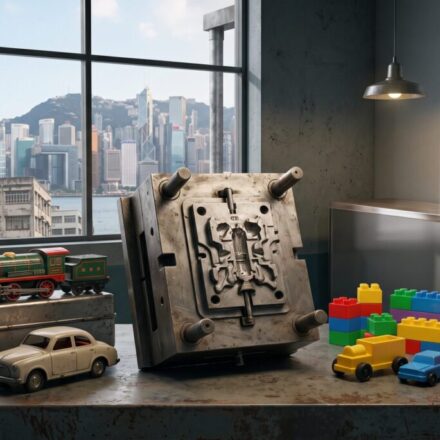
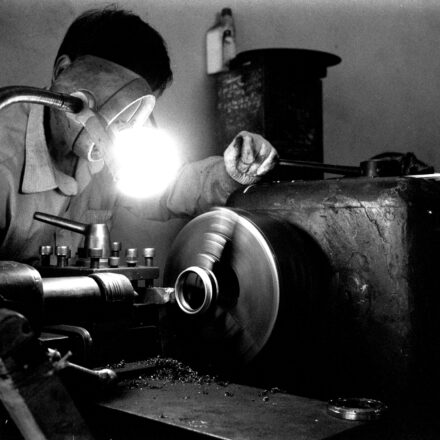
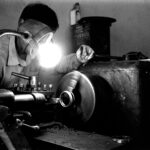
By the 1970s, Hong Kong’s plastics industry had moved well beyond simple finished products and into the far more demanding world of industrial mold development. Precision molds are the backbone of any plastic product, and Hong Kong’s mold engineers built a reputation for efficiency and technical flexibility, able to adapt production lines rapidly to meet the requirements of European and American brands. This shift gave Hong Kong manufacturers a strategically important position in the supply chain for electronic consumer goods components.
Factory management also shifted from labor-intensive to technology-intensive practices. In the industrial buildings of Kwun Tong and Chai Wan, engineers began adopting computer-aided design (CAD), dramatically shortening the time from initial sketch to finished mold. This technological edge allowed Hong Kong to sidestep pure competition on labor costs, instead winning the trust of multinational corporations through sophisticated industrial solutions — stamping the “Made in Hong Kong” label onto increasingly complex mechanical components.
The Story Ahead: From Physical Goods to the Circular Economy
As the digital era advances, Hong Kong’s plastics industry faces environmental challenges unlike any it has seen before. With growing global attention on carbon emissions and waste management, the traditional model of plastic manufacturing is being fundamentally rethought. Manufacturers are now turning their attention toward biodegradable plastics and resource recycling within the production process, searching for a new balance between environmental responsibility and production efficiency.
This isn’t simply a technical adjustment — it’s a shift in industrial mindset. From the plastic combs sold on street stalls to the precision molds trusted by multinational brands, every step of Hong Kong’s journey in plastics craftsmanship reflects this city’s resilience in finding a way forward despite scarce resources. Looking again at these products made in Hong Kong, what we see is no longer just plastic — it’s a manufacturing legacy deeply rooted in local craftsmanship, one that has continually evolved to meet the demands of its time.

Chief Editor, MIHK Focus
Directing editorial research on Hong Kong’s industrial history, heritage brands, and modern manufacturing trends. Focused on delivering structured observations, market insights, and archive-backed narratives on local production and commercial dynamics.
Follow Me