







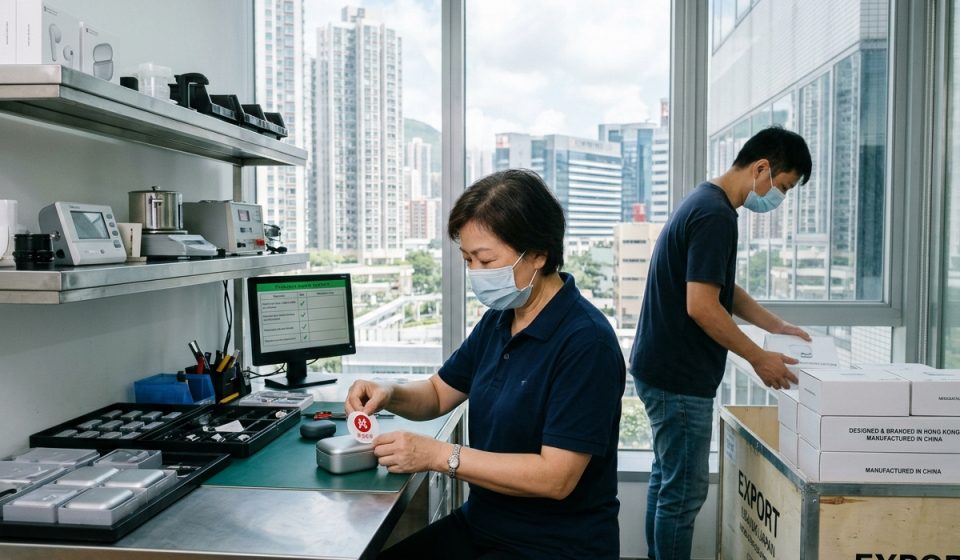
Hong Kong Brand vs. Made in Hong Kong: Redefining the Boundaries of Origin

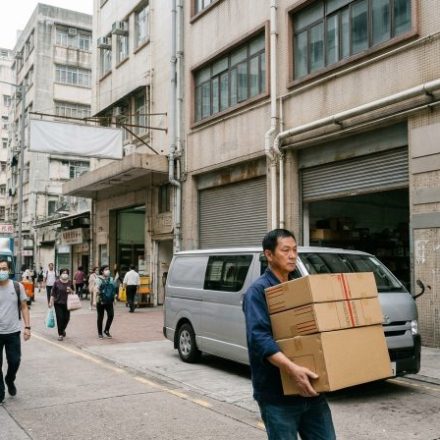
Look at the bottom of a carton of Vitasoy, and you’ll spot a single character printed there: 港, 上, or 光. That character has nothing to do with flavor — it tells you where the product was made: Tuen Mun in Hong Kong, Songjiang in Shanghai, or Guangming in Shenzhen. This small detail recently became the talk of the town again, thanks to a YouTube video that put it to the test: it turns out that this brand many Hongkongers grew up drinking is, in many cases, no longer produced in Hong Kong at all. That fact alone isn’t really news, but the question it raises is worth taking seriously: when a brand’s production map stretches across the globe, what does “Made in Hong Kong” actually mean anymore?
A Hong Kong Story That Began in 1940
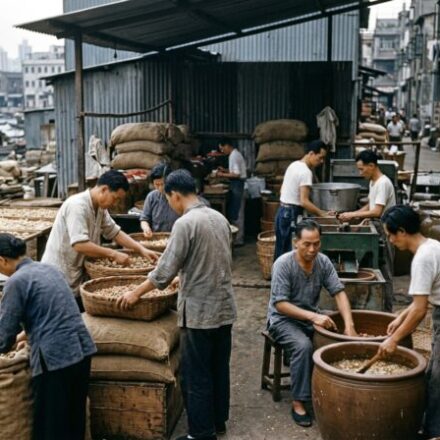
Vitasoy’s predecessor, the Hong Kong Soya Bean Products Company, was founded in 1940 by Dr. K.S. Lo. Lo had enrolled in the Faculty of Commerce at the University of Hong Kong in 1929, and after graduating went into business. It was after observing widespread protein deficiency among working-class children in Hong Kong that he decided to develop an affordable soy milk drink. During the Japanese occupation, the Vitasoy factory was forced to shut down, and Lo and his family fled to Lianzhou in Guangdong, where they got by selling homemade soy milk from a “Vita Food Stall.” After the war ended and Hong Kong was liberated, Lo returned and resumed operations, formally beginning Vitasoy’s history of local production. In 1994, the company listed on the Hong Kong Stock Exchange and was officially renamed Vitasoy International Holdings Limited (stock code 00345).
One Carton, Several Places of Origin
Today, Vitasoy’s production facilities span mainland China, Hong Kong, Australia, and Singapore, with products sold in roughly forty countries and regions worldwide. Looking just at products sold within Hong Kong, several different places of origin already coexist side by side: the 125ml mini soy milk cartons are mostly produced at the Guangming farm in Shenzhen; the 250ml and 375ml sizes are mostly made at the Tuen Mun plant in Hong Kong; and while the 1-liter cartons are still mainly made in Hong Kong, some also come from a factory in Foshan. A recent YouTube video went through the origin labels of various products one by one — cartons, bottles, silken tofu, and more — and found that some products’ “Hong Kong” identity didn’t match consumer assumptions at all. Some viewers even pointed out that genuine “Made in Hong Kong” Vitasoy is easier to find in Asian supermarkets in the UK or Canada than it is back home.
Brand Sentiment vs. Manufacturing Fact
Vitasoy has consistently stated that regardless of whether a product is made in Hong Kong or on the mainland, all of its products are manufactured in line with international standards and local regulations, under strict quality control. There’s nothing wrong with that response in itself — but it points to a deeper disconnect: consumers’ emotional attachment to Vitasoy is rooted in its identity as “the drink every Hong Kong kid grew up with” — inter-school volleyball matches, the corner shop in the housing estate, that little carton with a straw — and that emotional attachment has long since parted ways with the actual geography of where the product is made.
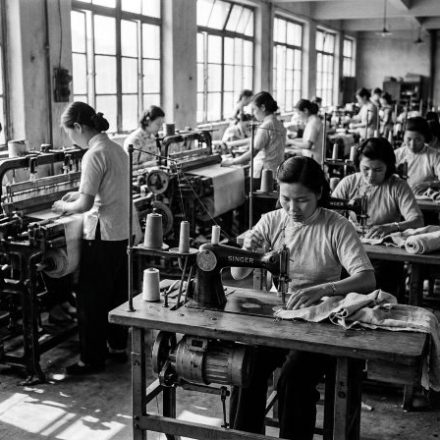
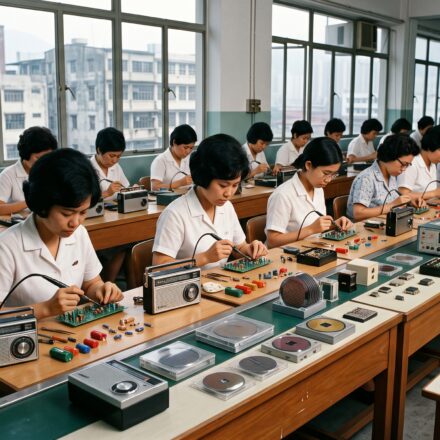
Once a brand’s production footprint expands into forty markets worldwide, a gap is bound to open up between the “Made in Hong Kong” that consumers picture in their minds and the geographic reality of how the factories actually operate. The real issue isn’t who’s right and who’s wrong — it’s that this very gap is a perfect microcosm of how Hong Kong manufacturing has transformed.
Where’s the Line? The Debate Over Defining Brand vs. Manufacturing
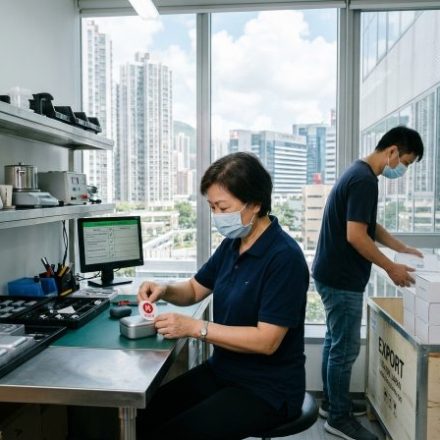
Vitasoy’s case actually fits the same pattern followed by other Hong Kong brands: a company can keep its decision-making core, recipe development, and quality control based in Hong Kong, while spreading its actual production lines across different regions based on cost and proximity to markets. This is essentially the same logic seen in fashion retail chains discussed elsewhere — the only difference is that Vitasoy still retains a meaningful share of physical production in Hong Kong itself (the Tuen Mun plant remains operational to this day), so it hasn’t gone all the way to the extreme of “brand stays, all manufacturing gets outsourced.”
Perhaps this is the most honest answer to the question of where the line falls between “Hong Kong brand” and “Hong Kong manufacturing”: it was never a clean, black-and-white boundary — it’s a spectrum. At one end sits a case like Vitasoy, where the brand and at least some manufacturing still coexist in Hong Kong; at the other end sit companies that have outsourced production entirely and retained only a headquarters. The sentimental attachment consumers want, and the cost realities companies have to face, will always be pulling against each other somewhere along that spectrum. Understanding that tension — rather than fixating on which single character is printed on the bottom of the carton — may be the clearer way to see what “Made in Hong Kong” really means today.

Chief Editor, MIHK Focus
Directing editorial research on Hong Kong’s industrial history, heritage brands, and modern manufacturing trends. Focused on delivering structured observations, market insights, and archive-backed narratives on local production and commercial dynamics.
Follow Me